The Cycle of Life
Thoughts about life in Ireland, cycling and what I've learned along the way
-
PhD Viva Voce
For the last three and a half years I have been working on my PhD. This week – last Thursday to be specific – I completed my Viva Voce and the successful outcome was essentially the last step in the process.
Phew!
My thesis is called Pathways to Competence and Participation in the Digital World – it is a study of the learning journey of adults who take up computer skills for the first time.
It’s a nice feeling to complete research especially when the topic has always been of interest to me. It is great to have had the opportunity to learn in this way.
No doubt there is more to be done and I am planning some publications and perhaps a few blogs in the future will feature ideas from my research.
For now I am reflecting on why I decided to do a PhD in the first place and how I feel about that now.
I genuinely wanted to know more about the field of education – although I have extensive experience in terms of business and media especially television production – scholarly research is another way of looking at the world.
I have always been intrigued by learning – why and how we learn and (as a great learning theorist Knud Illeris puts it) why we sometimes don’t.
Throughout our life, learning is perhaps the most important continuous process that we engage in. I continue to enjoy the journey. -
The Road – by Cormac Mc Carthy
 I am a slow reader by choice.
I like to take my time with a book especially when it is well crafted and beautiful.
McCarthy’s ‘The Road’ took some time – although it is not a big read and the comments on the cover suggested that it may (and should) be read in one session – I did the opposite and read two or three pages each night over the last few weeks.
Why does this book resonate?
At one level it could be described as bleak, lacking in plot and gruesome.
But there is something captured here that is difficult to describe and yet powerfully familiar.
It may be that this novel somehow connects with our collective unconscious and reveals a stark truth about existence.
Can’t really work it out … no need just let it be. -
Ian Paisley Comes to NCI
Dr Ian Paisley arrived at National College of Ireland as part of the Legends in Your Lunchtime series.
The idea is a series radio interviews with famous people recorded in front of an audience at the college. Newstalk and Metro partner with NCI for these events.

Paisley can still attract a crowd.I have to say I have very mixed feelings about Paisley. Like many people who lived in the Republic throughout the troubles I regarded Paisley as the epitome of unionist intransigence. No one can say for certain but fixed and extreme views on both sides meant that a resolution came about only after many, many more years than necessary.
Paisley must shoulder his share of responsibility for this.
Still, as I sat near the front of the lecture theatre, I could not help but be taken in by the warm, affable manner of the 82 year old Paisley.
George Hook as the interviewer is old enough to remember how in the bad old days Paisley used to storm out of TV studios if he did not like the question or the tone of the interviewer.

George sat stern faced in the lead up and I wondered if he’d be up for the task.
Paisley himself sat well back and placed his well-worn copy of the King James Bible on the table in front of him.
And so down to business….

George started on comfortable ground “tell us about your mother and growing up in Ballymena”.
The early exchanges were were a tame affair – even Paisley wanted to up the ante
“If you strike an Ulster man he’ll strike you back – it’s as simple as that”. This was how Paisley summed up the troubles.
George decided that this was warning enough and kept the next few questions along the religious theme asking about Paisley’s bible and his days in a seminary in Wales.
Soon George got into his stride and decided to lob in a few testing questions to get the big man going – “sure you and the pope have a lot in common” he quipped. Paisley had heard that one before and quickly pointed to his book – a direct line to God.
George realised that Paisley was not going to run and decided to ask the big question. “What if your wrong – what if you die and there is no God – I have to confess I worry about that myself” – George was honest enough about his own doubts.

Ian has been preaching all his life and rattled off a great platter of God-affirming experiences. George looked almost convinced and I thought we were going to witness a live conversion.But Hookie was wiley enough and there were other questions to ask – what about the peace process? Do we really need a border?
All the time Paisley’s responses were clear and predictible.
So now we have a new Paisley – a big teddy bear – or really a dinosaur confident in his religion and ready to meet his maker.
It was good to witness this and it’s a great example of what third level institutions should do to open minds and to engage with wider issues.
I caution that we should never glorify the obstenate, retrenched or bigitoted behaviours of the past past but equally we should be open and receptive to those who make peace.
After all the good book says:
“Blessed are the peacemakers, for they will be called sons of God” (Matthew 5:9)
. -
The Child Abuse Report – Adults now Children then
I can’t let this week go by without commenting on the publication of the report on abuses in the Irish education system by members of religious orders.
The report was particularly scathing of the Christian Brothers.
I went to a Christian Brothers school and indeed was walloped, slapped and beaten like many others. There was violence in my schooling but also lots of good stuff and on balance I got away lightly.
In light of the report I wish to comment again on the phenomenon of Learning Identity – I talked about this in a previous blog.
As you might expect my ‘learning identity’ is made up of two components – my view of learning and my view of myself as a learner. For many adults, including the victims of abuse in educational institutions, learning identity established in childhood remains fixed throughout life.
The consequences of the deplorable schooling system are still being felt today – people have fragmented learning identies. For many, even to think about formal education will give rise to extreme anxiety.
As such, these people miss out on the opportunities to progress and to participate effectively in society.
For those of us involved in current adult education provision – we need to think first and foremost about how to deal with learning identity.
We have a lot of work to do rebuilding the trust and confidence of adult learners – convincing them that current pedagogic practice is not like school and that they have a lot to offer as lifelong learners.
We will never adequately compensate the victims but we should strive to limit the negative impact on their lives today.
Everyone has the right to learn throughout life – this is especially the case for those whose childhood opportunities were so cruelly denied.
-
Dachau
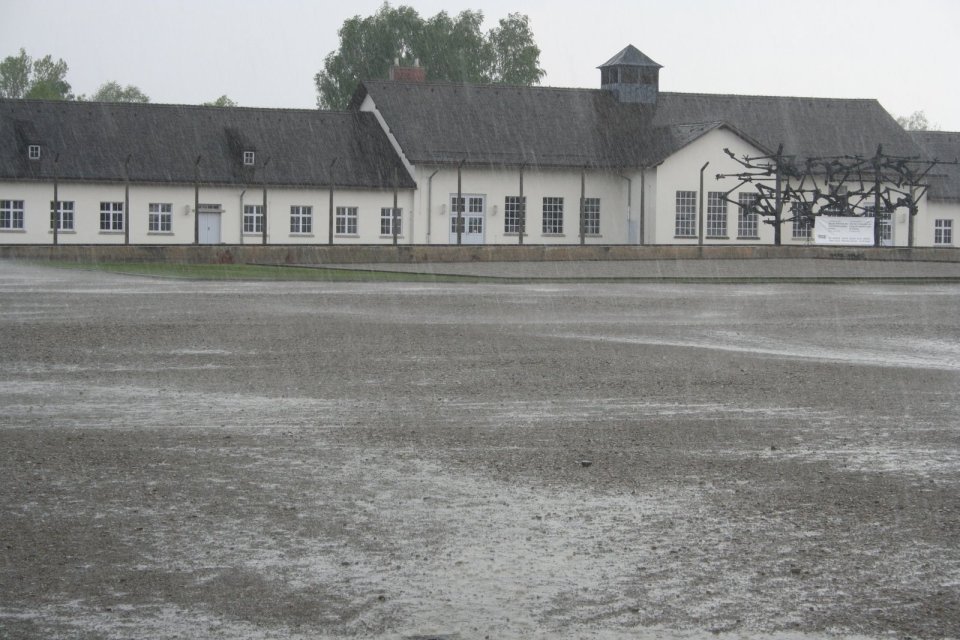
This is Dachau – the first concentrati on campt built by the Nazis.
Be careful not to become smug when you visit this place – we are all convinced that such a place could never exist again and that there is no way that ‘normal’ people would be convinced to co-operate if it was attempted.I spent some time in Munich when I was in my twenties (circa 1980) – I had a fantastic time and made many good friends. Although I knew about Dachau I never went to visit. My wife, Maire gave me a wonderful present of a trip back to Munich for the May weekend and this is how I came to take the picture of the square in Dachau KZ.Look closely and you will see that it is pelting rain.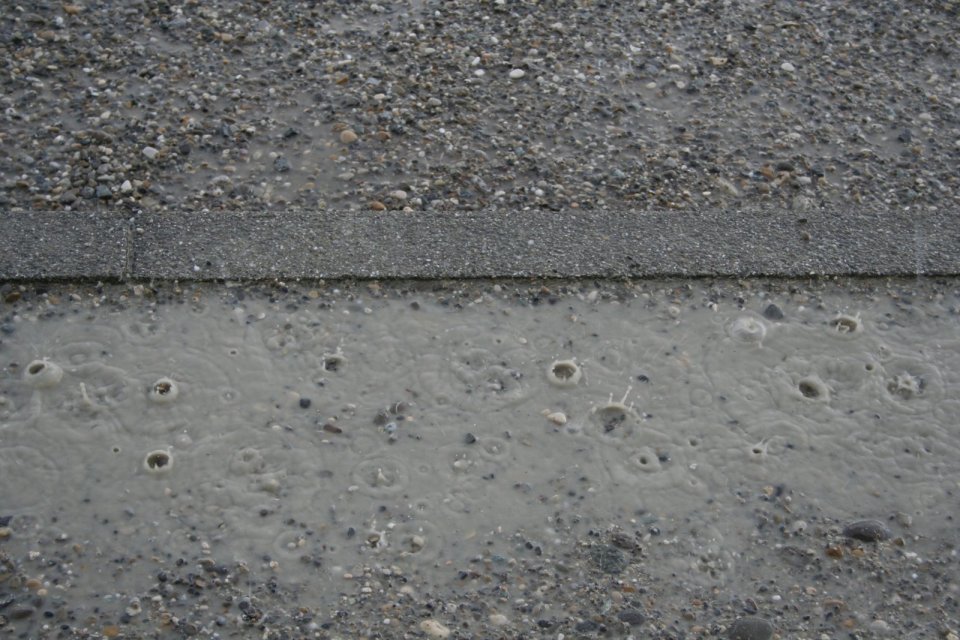
There was a great crack of thunder and lightening – it struck quite close and left a strong lingering smell of ozone – all of this served to magnify the sense of unease at visiting this place.
Much has been said about these places – I feel that everyone should take time to reflect on how evil can come about and be sustained.
Dachau is a medieval town and the guide books emphasise that it was always a nice place to visit.
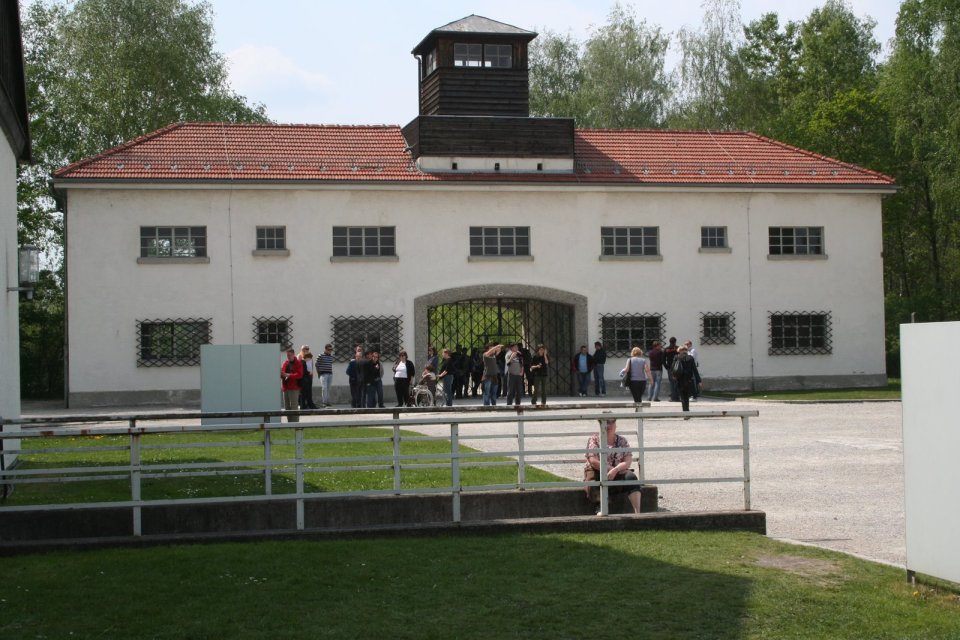
I was struck by the ordinariness of the place – including the camp.
Look at this picture of the gatehouse – it’s not very big and it is reasonably well designed – when you read about what went on here it is difficult to believe that this same building was used to subdue, torture and murder people. “In this room on the second floor was the Gestapo interrogation room”.
What unspeakable stories are locked within these walls.
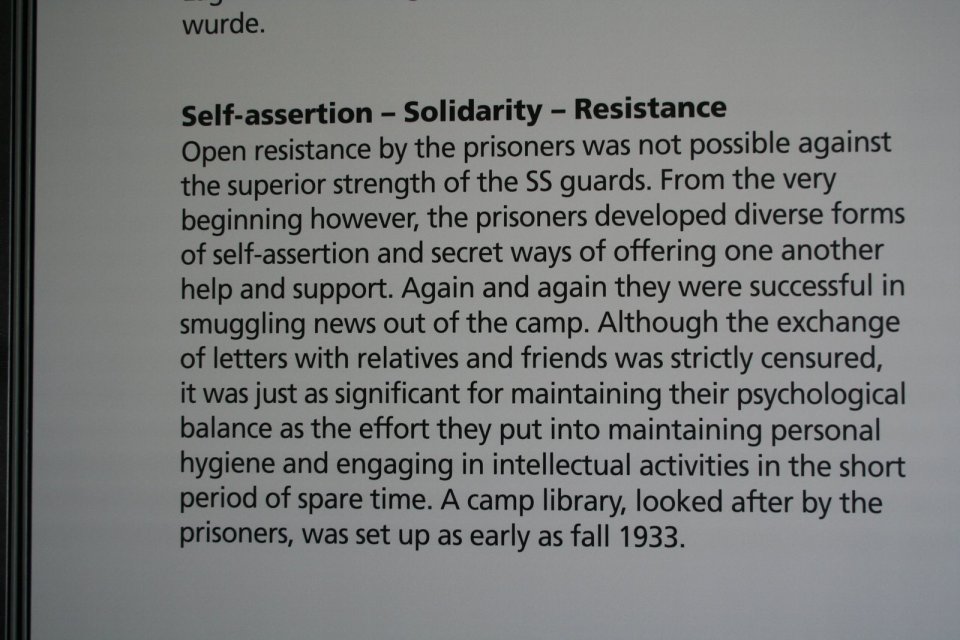
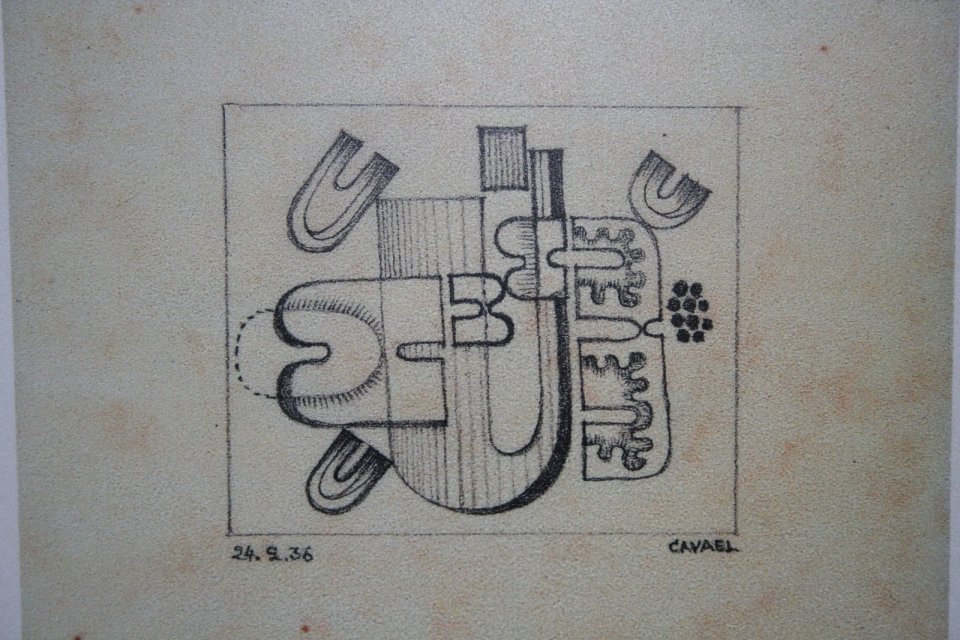
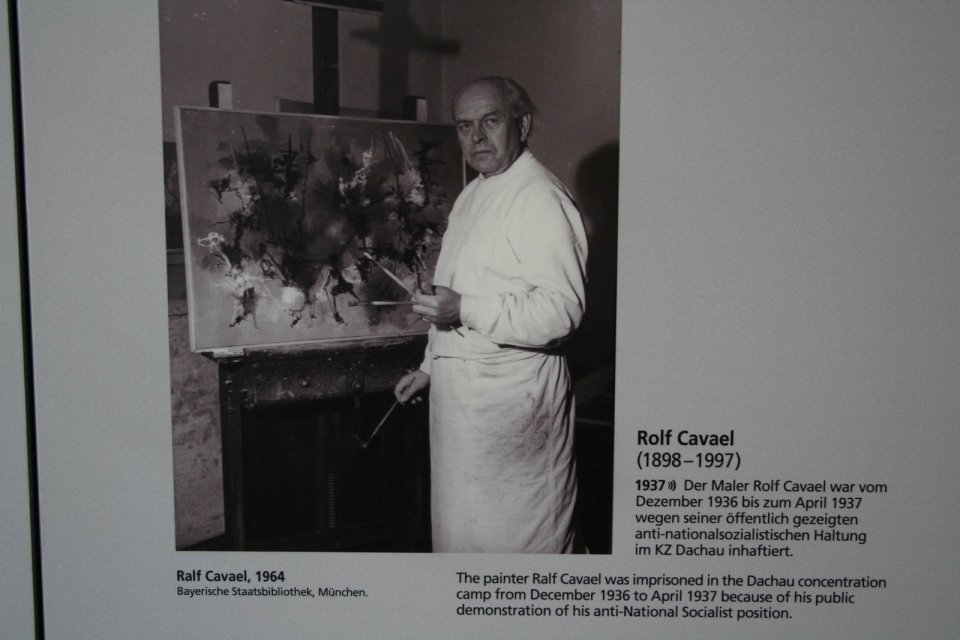
Even here – people sought to be competent and fulfilled.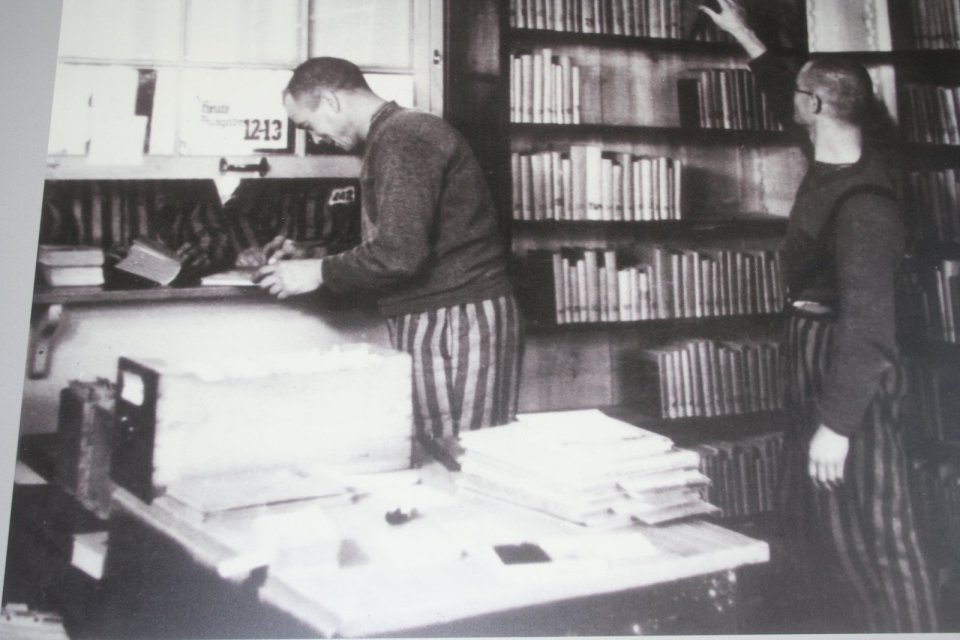
These pictures show the library at Dachau and the work of an artist interned here.

-
Cardiff and the Rugby Grand Slam
This weekend I was fortunate enough to be able to travel to Cardiff and watch the Irish Rugby Team beat Wales to win the Six Nations Tournament and the Grand Slam. We were thrilled to be labeled as champions of the six nations. For those of you who may not know the six nations are England, Wales, Ireland, Scotland, France and Italy. These are the countries in the Northern Hemisphere where rugby is played by a significant section of the population.
Have you ever asked why is rugby played in one nation and not in another? Even withing countries, it is even the case that rugby is associated with different social and cultural groups; the Welsh regard rugby as a working class game whereas in parts of Ireland, rugby is considered as an elitist game, associated with mainly private schools.
I grew up in the Phoenix Park in Dublin and went to school in CBS North Brunswick Street. Our inner city school was run by the Christian Brothers and rugby was not encouraged – it was considered a foreign game. In fact, in school we were only allowed to play the games of our ‘nation’ – these were hurling and Gaelic football – known as gah (after GAA – Gaelic Athletic Association). Of course our game was soccer – this was (and still is) the street game for inner city Dublin. We often played football in the school yard and whenever we broke a window we would try to get back the ball and then start playing gah – we knew we were in trouble but the sanction for breaking a window playing the nationalist game of gah was going to be far less than that for playing a foreign game like soccer.
When I went to university (UCD) I became more aware of how different games were associated with different schools and social backgrounds. I even played a bit of rugby – very badly – but I enjoyed it and have, ever since, had a keen interest in the game.
We often distinguish between the terms of ‘nation’ and ‘country’ – a nation is a people and country is a land, a nation signifies a common cultural identity, a country (for example the US) can be made up of many nationalities. One might therefore expect that the Six Nations Tournament is so-titled because it is a competition between six peoples or cultural identities.
This is true to a certain extent, Scotland, England and Wales compete as three nations – in the Olympics they compete as Great Britain (or, more precisely, the UK of GB and NI).
Strangely enough (or perhaps its not strange at all) the situation is more complicated in Ireland. The ‘Ireland’ that presented itself on the field in Cardiff on Sunday was a united Ireland – representatives of Northern Ireland and the Republic of Ireland play on the same Irish team. We even sing a special song, Ireland’s Call, instead of our national anthems.
Actually, the Welsh too wouldn’t dream of singing God Save the Queen – the UK National Anthem – they use the awesome Welsh anthem Hen Wlad Fy Nhadau. Believe me, when you hear 70, 000 of them singing this in Cardiff before a match its one of the best displays of communial singing one could experience.
So we have two teams, two nations, one in green and one in red – bringing together the working class Welsh with the posh people of South Dublin (fast being challenged by the vibrant rugby playing communities of Navan, Boyne, Naas and Barnhall), the tribes of Munster (definitely not posh!) and the men of Ulster (Ulster not Ireland!). For eighty minutes all these peoples unite for one purpose -to play rugby, to watch rugby. Across the six nations many millions watched on TV – they gathered in pubs and in houses, community halls, sports clubs – they wore their colours, their nation’s colours and they participate in the game.
In common with the southern parts of France, the slopes of northern Italy, the lowlands and borders of Scotland the valleys of Wales and the public schools and communities of England – we play rugby. We could say their were no nations – just parts of nations or we could say there were many nations – many more than six. In the end I think the six nations works fine – I am still happy, very happy that we grand slammed the other five. -
Storyteller’s Concert in Lough Rynn Castle

So we were down in Leitrim for the weekend and didn’t we discover as we arrived that this was the most interesting of weekend’s to be in Mohill. The Storytelling festival and the horse fair were both on. Maire and I went to a storytelling concert in Lough Rynn castle and it was an enthralling experience. What struck me above all was the manner in which we become mesmermised by good stories and how the craft of storytelling is still very important in the modern world.
Coincidentally the previous day we had a Friday lunchtime seminar on learning and teaching in the College and the importance of stories and good case studies was emphasised. The role of narrative as a vehicle for learning has always been important -it is perhaps the oldest way of education.
Often I come across instrumental approaches to teaching -the idea is to break up the content and to distil the important points and ‘give’ notes to students for later reproduction. We then seem baffled when there is little retention or deep level learning. The stark presentation of abstract concepts is of little value to students grappling with these concepts for the first time.
Old wisdom was handed down through generations embedded within the stories of the time. These stories act like egg yoke providing nourishment to the knowledge and ideas buried within the narrative.
Of particular interest was the genesis story as told by Clare Muireann Murphy which she attributes to a fellow story teller from Spain. In that story God creates man and women and makes them blind and set apart across a river in huts surrounded by noisey leaves so that He could hear if they got up to anything. Inevitably lust plays its part and they are cast out and as in other versions we have woman as crafty instigator and man as mindless instinct.
I believe that genesis stories are archetypes describing the nature of human learning and development. A kind of ‘curiosity killed the cat’. Except that the place where Adam and Eve start out Eden -a garden or as in Clare’s story a hut by a river is usually portrayed as nice but empty. Something is missing? And surely what’s absent is inquiry, questioning and curiosity -in the Spanish story the two participants find their eyelids covered over by skin. When they release their eyes (which were always underneath) they get up to devilment. But its pleasurable and compelling and eventually they are cast out of the place of tranquility.
This is the human prediciment -we strive to change and progress and with these strivings we bring risk upon ourselves. But this is what we do -this is what we’ve always done and for all the Edens I prefer to take my chances with curiosity and spend my time out here outside the garden.


