-
Reflection, Teaching Practice and Learning from Experience
Teaching practice or placement is one of the hallmarks of initial teacher education. As with many professions, the novice teacher is expected to learn through experience in an authentic setting. Student teachers are often required to write reflections on they have learned in placement. Many struggle with the task – wondering what actually constitutes reflective writing and why there is so much emphasis on the process of reflection.
Many look to scholarship to provide answers and works by Dewey (1933, How We Think), Schön (1992, The Reflective Practitioner), Boud et al (1985, Reflection: Turning Experience Into Learning), Mezirow, (1990, Fostering Critical Reflection in Adulthood), Brookfield (2005, The Power of Critical Theory for Adult Learning and Teaching) and Moon (1999, Reflection in Learning and Professional Development) are all good resources to improve ones understanding of reflection.
However, knowing the characteristics or constituents of reflective practice is not the same as engaging in reflective practice. Indeed, I have read many essays by students who describe the underpinning theory of reflection but fail to grasp the challenge of practicing reflection.
It is important to realise that the foundation of teaching placement is learning from experience. We are in danger of missing the point if we emphasise ‘reflection’ per se rather than learning. It is more useful to regard reflection as part of the learning process – often an essential part.
A good starting point is to consider a basic model of reflection as a ‘a situation with me in it‘. This simple conceptual device has a lot of complexity behind it. Normally, when you think about an experience – say a lesson you taught – your first inclination is to remember from your own perspective. You would perhaps think something like ‘that went well – I could see the attentive looks of my students as I was explaining’. Good for you! But that’s not thinking about the situation with you in it! That’s your recall of your perceptions of the situation.

A basic model of reflection Notice the imaginative shift to look back on a situation and place yourself in the picture. W B Yeats’ poem Among School Children provides an example of this shift when he uses the line “the children’s eyes – in momentary wonder stare upon – A sixty-year-old smiling public man.”
This sense of looking at yourself – often through other people’s eyes (as in Brookfield’s Lenses) – is characteristic of reflective thought. Notice how powerful the simple device can be. I can reflect on events, interactions and complex experiences. Even ‘big picture’ issues like global sustainability can be subjected to reflecting thinking “There I am in the world and what am I doing to sustain it?”.
Teachers and many other professions involving human interactions need to engage in reflective practice. No two teaching events are the same. Unlike for example, piloting an aeroplane there is no procedural manual or situational checklists one can draw upon. Teachers develop their skills and knowledge through the ‘engine of experience’.
Accomplished teachers are expert reflective practitioners. They have developed not just the instrumental skills of teaching, but the much deeper capacity to know what skills matter and when to use them.
Reflective writing and journaling are useful for developing reflective capacity. This is especially true for novice professionals.
Here are some guidelines to get you going.
Reflective writing is about: Reflective writing is not about: A situation with me in it A situation from my perspective Questioning my assumptions Defending my actions Possibilities & alternatives Theory and practice Demonstrating how I came to know Demonstrating what I know Learning from experience Describing experience -
Ready to Learn – Taking the First Step
Oh I was just wondering have you got a moment, I just want to ask you about something‘ she had arrived at NCI reception and they suggested I might meet with her. ‘No problem at all‘ I assured her while thinking how much I had to do that afternoon.
Five minutes later she sat in my office. She was very nervous and I thought I noticed a slight trembling in her voice. Her name was Susan.
‘It’s like this‘ she said ‘I was thinking of doing a course here but I am not sure if I’d be able for it‘. She went on to tell me her story. She left school at sixteen without a Leaving Cert. She worked in the retail sector for the last twenty five years and now she is a manager. She is married with three kids and two of them are in college. She reads a lot and is well liked by her colleagues. Generally, she’s happy.
But there’s always been a niggle. An unease and sense of being often left out, ignored and taken-for-granted. ‘Sure what would Susan know‘ she once overheard a younger colleague remark.
Susan explained that she has been thinking about college for years but had never taken the first step. Recently she floated the idea of doing a course with her friends and family ‘Yeah go on why don’t you give it a try‘ they would encourage her. But deep down she was nervous and didn’t know where to start.
‘So I don’t know Leo why I’m here, perhaps it’s just a crazy idea, I mean, I don’t even have a Leaving Cert and I was crap at school, this is a terrible idea, sorry for wasting your time‘. I just listened, it was like I was the audience for her inner debate. ‘But I can do it! I’m good with words, this is for me, this is my chance!‘
‘Would you like a cup of tea?’ I asked, eventually finding something I could be useful at. ‘Yes that would be great‘.

Later we talked about adult learning and how she was not that unusual. College, especially National College of Ireland, is not like school. Adults are welcome and treasured as they bring valuable life experience to the classroom. We discussed how people like Susan make a conscious decision to learn and often thrive when they go to college. They find new ideas, make new friends and find new meaning in their lives.
Years later we were standing at the conferring ceremony in the National Convention Centre, Susan was all gowned up and proudly clutching her parchment. She introduced me to her family and there were smiles all round.
‘Do you remember our first meeting?‘ she asked. I nodded ‘yes’. ‘Well! I just want to say thanks for the tea. You make a good cup of tea‘ she grinned ‘one that will last a lifetime!‘.
-
Getting to Grips with Academic Writing
Yikes ! I can’t write this assignment!
Some students find it difficult to get to grips with academic writing tasks. Whereas they often understand key concepts associated with an assignment or task they find it very difficult to express these in writing.
The problem can lead to stress and frustration on all sides as written assessments may not be seen as a fair measure of student learning outcomes.
Of course every person is unique and it is not always easy to provide good advice for all situations; that said, I have noticed similarities in the challenges students face and so I hope the advice I provide below can be of help.
Technical versus Mindset
There are two types of barriers to writing ability. The first is ‘technical’, by this I mean literally the skills of grammar, vocabulary and composition – the kind of stuff you should learn in school. For a various reasons, students often miss out on these skills and need to work on their basic literacy and writing technique. Thankfully, this is not a common problem in higher education but it is important to be mindful that people can get very far in the system by avoiding situations that force them to write. In the end this lack of skill is exposed when the first assignment is posed and the student is unable to respond.
Students with serious deficiencies in the technical aspects of their writing skills will require support and supplemental classes to bring them up-to-speed. Although it takes time and effort, most students will build their skills through practice and feedback.
Another type of type of barrier – the ‘mindset’ barrier – is much more common but often overlooked. In this situation students are good writers in other contexts but struggle when it comes to academic writing.
How to overcome mindset barriers
The first step is to try to understand what’s happening. Sometimes I need to decode what people are saying in order to get to the root of the problem. So when a student reports “I’m just waiting until I’ve read everything I need to know before I start to write”. Often what they are really saying is I am putting off writing this assignment for as long as possible. When a student says “I’ve written the first paragraph but I can’t get past that point”. What they’re really saying is I have written the first paragraph again and again and again trying to make it perfect. And when a student says “I’ve written the paper but I am not happy with it and now I have to rewrite it”. It really means My standards are such that I cannot possibly meet them in my own writing.
I’m not trying to imply that people are dishonest or deceptive about their challenges. No that is not the case, rather it seems to me that when we encounter a problem we do our best to analyse the situation and come up with a solution. Our first attempts are often hampered by a misunderstanding of the nature of the barrier and hence we come up with a faulty diagnosis.
Try this, imagine there are two aspects of the writer’s mind – one is the worker and the other is the manager. The manager says ‘get going and write this assignment as best you can, remember there are marks for this and you are going to be judged‘. The worker gets on with it and writes the first few sentences. Then the manager intervenes and reads to sentence ‘that’s not quite correct you’d better rewrite‘. You can see what’s happening – the manager never gives the worker a chance, always second guessing and interfering with the process. This is the most common barrier encountered by students.
The situation is greatly amplified by the characteristic requirements of an academic writing task. In many cases the assignment is part of a high-stakes assessment regime and this gives the ‘manager’ in you an inflated sense of importance. Add to this, technical requirements such as academic citations, formal language and highly specialized terminology. Now the ‘manager’ function is elevated to supreme importance. And, in practical terms, completely suppresses the poor worker. You can’t complete a sentence or paragraph done without persistent self-examination and critique! This leads to doubt and stagnation and undermines the self-confidence of the writer.
The irony is that it is the over active ‘drive to achieve’ that acts to impede achievement. There are many analogies in real life, you will not get a note from a wind instrument by blowing hard, a tennis player who over hits will be out of court and an aggressive opening in chess will often lead to an early demise.
The solution is to manage the ‘manager’. Tell it to be quiet, step back and let you work. Of course your first outputs will not be perfect but you will make progress as you do (rather than think about) the task. Yes there are appropriate times to take stock, re-read and improve; but you also need to have something to work with.
For my part, I always write my first paragraph once and then leave it alone until the very end. Only when I have most of my paper written do I revisit the opening paragraph. It is often the last thing I write. This has the added advantage of allowing me to state in the opening all that the reader can expect. I see a written composition as a sequence of ‘full draft – then revise’, rather than ‘write a bit- then revise’ and ‘write another bit – then revise’ and so on.
It’s very simple. Nobody is born with perfect writing skills. Writing is developed through practice. Practice involves doing. You learn to write by doing, not thinking about, writing.
So good luck with your task and tell that manager to go away and leave you alone so you can get on with it!
-
Ten Tips for Writing Academic Papers
Completing academic writing assignments is one of the most important skills you will need to develop as a student. This is true regardless of your subject or discipline.
Based on my own experience writing and correcting papers and discussions with students I have compiled these ten tips to help you get going. I have used these at the Academic Writing Club we set up in National College of Ireland to support students through the challenges of this process.1 Read the task
Spend time reading and analysing the task you have been assigned. Look for action words such as ‘discuss’, ‘compare’, ‘critique’ and so on. Check if you need to provide examples or to analyse or deal with a particular context. Write the task at the head of your essay and make sure you address every component of the assignment.
2 Get on with it!
Start writing straight away – don’t keep putting it off. Many students say they need to read first and write later. It is better to read and write at the same time (see tip 4 below).
3 Use the opening paragraph as your plan
Start with something like “In this assignment I will….” and then go on to describe what the reader can expect. Write this paragraph first. Then leave it alone – don’t keep reworking it during the writing process – wait until your assignment is near to completion and then (and only then) rewrite the opening.
4 Read and research with purpose
Once you have a plan (based on your opening paragraph) you can then attack the required background reading. The secret is to be ‘purposeful’ in your approach. Continuously ask yourself why you are reading the specific text before you and what it will contribute. Write snippets as you go. Don’t get taken in by mindless reading and avoid ‘nice to know’ sidetracks – if you come across something interesting but not directly helpful to your assignment put it in a folder for future reading.
5 Make three points
I want to make three points about this tip. First it’s a useful starting point for a new topic – it gives a simple structure and the reader knows what to expect. Second it stretches your thinking so you can easily compare and contrast the ideas you wish to discuss. Finally, you can always keep going to add more and more points later.
6 Use paragraphs to provide structure
One of the most useful and often neglected devices for both writer and reader is the paragraph. It is often possible to write separate paragraphs from different parts of your assignment and to connect these in later drafts. An advantage of this approach is that your notes and memos will gradually build to become paragraphs. Each paragraph should have it’s own structure – pay attention to the key sentence that usually carries the main message of the paragraph. Make backward and forward connections with linking sentences throughout your paper.
7 Remember you are the writer
Many students fail to grasp that a term paper assignment is essentially a learning task that requires their engagement in the process of writing. It is more important to provide your own thoughts (even if you feel they are inadequate) rather than reproducing the work of others. Keep quotations to a minimum and cite all your sources using one system of referencing such as APA, MLA of Harvard.
8 Keep it clear
Write in a clear straightforward style. Avoid complex sentences. Make your argument with precision and elegance and use no more words than necessary.
9 Write a little every day
Writing can be tiring especially if you are not used to it. It’s a good idea to break the task down and write something each day until the assignment is due. Even if you are busy with other things or feeling tired try to accomplish some part of the work – such as proof reading or formatting – in every session.
10 Write a summary and conclusion
A summary captures the main points that you have made such as “here I have provided ten tips on academic writing for students” while a conclusion provides a key message that can be inferred from your paper such as “it’s over to you now good luck with your academic writing“.
You May Also Like

Getting to Grips with Academic Writing
-
From marks to Marx: Shifting your mindset for learning
We all like to achieve and when it comes to doing a course or gaining a qualification we want to achieve the best result possible.
Naturally we want to get an A+ or a First Class Honour in whatever subject we study. Striving to get a good mark – a Distinction, Merit or Commendation – is a useful approach to learning and for many people it is the driving force guiding their learning effort.

We all like to achieve in learning but what should we really aim for? (My picture of Doo Lough, County Mayo) However, it is worthwhile to ask if it the ‘best’ approach? Is there a better, more fruitful and, in the long-term more rewarding target to aim for?
I argue that there is and want to make a case for moving beyond a simple focus on marks and assessment to the more expansive idea of growing your mind through ideological critique and praxis.
If you are an active participant on a course you will likely have learning goals. These are implicit and explicit statements of what you wish to achieve. How you approach different topics and learning challenges, where you apply effort and how you measure progress are all parts of your learning strategy which in turn is guided by your goals.
It is useful to be aware of your learning goals and to be prepared to question and review them regularly.
What do I want to achieve?
This is the most important decision you can make about your own learning. You could decide “I want to pass the exam” or even go further “I want to get an honours grade” or further again “I want first class honours”
or
you could go beyond grades and shift your goals toward an intrinsic interest in the subject and strive to master the topic in itself.
You could also consider goals that relate to your own competence such as “I want to develop a new design for….” or “I want to investigate why…..” or “I wish to become very knowledgeable on…..”. These goals are stated without reference to the formal assessment process.
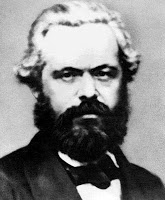
Karl Marx in 1861 As an adult, you can go further again. Here I quote from Karl Marx, the last line from Thesis on Feuerbach
The philosophers have only interpreted the world, in various ways; the point is to change it.
The term ‘praxis’ is used to denote a process whereby theory, skills or knowledge are used to realise and enact the potential therein. Through the writings of Paulo Friere we see how literacy education results in emancipation. Lives can be transformed and the prevailing order challenged. Imagine that as a learning goal “I want to change the world”.
This is not some vague, idealistic notion that can be countered by the shallow challenge of “that’s all very well but I need to pass my exams”. The most important goals in adult learning should be ideological critique and praxis. Everyone who learns has a responsibility to contribute and improve our world.
Students in our schools, colleges and universities are often well placed to use praxis as a purpose and means of learning. For example, in National College of Ireland we have an elective module on Service Learning available to our business undergraduates. However, many students fail to grasp the opportunity. They see the purpose of college in narrow terms and focus on their next assessment and look for formulae to get good marks without much effort.
As educators we need to take responsibility for providing a limited view of learning. Much of the assessment infrastructure is built around pre-defined learning outcomes and an instrumental view of what it means to achieve. We need to question the system and challenge the underlying assumptions. It’s time to critique the ideology of our education system – in short, to shift mindsets from marks to Marx.
Strangely enough, at a personal level if you move your learning mindset beyond the next assessment and adopt critique and praxis as your ultimate learning goals you will likely achieve high marks in all that you do.
You May Also Like
Getting to Grips with Academic Writing
-
How to Write a Literature Review for a Dissertation
Writing a Literature ReviewWriting a dissertation is one of the great learning tasks of college education. However, many students find it a daunting process. One of the first challenges you face is writing a literature review and the purpose of this post is to help you get started with the process, to keep you on track as you proceed and to provide a means of self-reviewing your outputs when you (think you) have completed.Let’s start with a simple set of questions: What constitutes a literature review? What is it used for? and What distinguishes a good literature review from a poor one?As the name implies, a literature review is a review of other people’s work in a particular field of scholarship. Such a review is always directed and informed by the research question to be addressed. For example, if your research question is related to adult literacy then you will need to provide a review of other works, be they theoretical models, research reports or practice studies, that relate to adult literacy. Most importantly, a literature review cannot be of any value unless it is referenced to some form of research question or problem.It is a common mistake for students to misunderstand the purpose of a literature review – it is not a means for the student to demonstrate wide ranging knowledge or to reproduce theory or to provide a history of developments in a particular field (although it can involve each of these). It is simply a matter of ‘re’viewing the literature from the perspective of the research question or topic. In other words, asking and addressing questions of the form ‘if such and such says or has found this then what are the implications for my research?’
The purpose of a literature review is to guide and support you and your reader in furthering the investigation or inquiry at hand. In academic scholarship you can and should build on the works of others – provided they are properly cited.Here is an analogy that might be useful: If you were planning to visit Rome then you would likely consult a guidebook and some web sites for information. You would be very interested in the section dealing with the specific area were you intend to stay, and you would also focus on the sites you plan to visit. To a certain extent, you don’t need to read everything in the guidebook. However, you might need to bring the guidebook with you and consult it during your visit. Imagine if each visitor had to explore the entire city for the first time – we would have very poor experiences in Rome. It is wise therefore to find out from other sources all that you need to know to make your particular journey as successful as possible. So (please forgive me if this sounds patronising!) consider the following – the value of a guide book is always considered with respect to the place and time of your visit and similarly, literature reviews are intended to support the research inquiry at hand.In academic scholarship you can use a literature review to address the following issues:
- To outline a conceptual framework for your research question
- To develop an argument as to the importance of your research question and to discuss the wider implications amd context
- To discuss the theoretical and philosophical (epistemological) underpinnings of the problem
- To refine, focus and improve the research question
- To discuss relevant and related theory, models or frameworks
- To discuss other relevant research
- To discuss research approaches and methods (although a fuller treatment of this is normally part of a later section on methodology)
A good literature review is never passive – the writer is constantly making connections between the work of others and the current research or inquiry. Indicators of a good review:- It is constructed from and connected to the research question
- It is comprehensive in relation to the research question
- It is connected and well structured
- It provides a sound foundation for the other components of the dissertation
- The writer adopts a critical stance
The most straightforward way to organise a literature review is to structure it around the central themes that arise from the research question.Here are 10 questions you can use to self-assess your literature review:- Have I clearly stated my research question or problem at the onset?
- Have I provided an introduction that indicates the structure of my review and a rationale for that structure?
- Have I discussed each of the concepts/terms as used in my research question and provided a rationale for their inclusion?
- Have I conducted a comprehensive search for, and included the key relevant theoretical and research works related to my topic?
- Have I connected all parts of the review to my research question?
- Have I adopted a critical stance in my writing?
- Have I included discussion on other similar research?
- Have I argued for the importance of my research question and framed it in terms of wider issues and philosophies?
- Have I correctly used the Harvard Referencing System or similar?
- Have I proof read the review such that it is free from typos and errors?
You May Also Like
Getting to Grips with Academic Writing
-
Dissertation Writing
 This is a busy time for many students who are working to complete their dissertations.Having supervised and examined submissions over the years I appreciate the investment of effort that students make when completing their research dissertation.For many Master’s degree students this is their first truly self-directed learning project and the experience of carrying out primary research transforms their outlook on knowledge of the world.I would like to offer my top tips for Master’s dissertation writers, here they are:
- When you write a dissertation, even a scientific work you are telling a story – it’s important to unfold the plot in manner that will engage the reader.
- The research question is the crux of the narrative – you need to articulate this question clearly, concisely and frequently throughout the thesis and use it to connect all the parts together.
- A good research question has three characteristics (i) it arouses curiosity in both writer and reader (ii) it contributes significant and useful insights and (iii) it is suitable for investigation by means of an established research method.
- The purpose of a literature review is to establish a conceptual framework for the research question and to discuss other relevant or similar research. Therefore the quality of a literature review is by means of its connection with the research question. A review without reference to a question has little merit.
- Be careful with claims! Statements containing terms such as proved, verified, experiment, significant and so on have certain precise meanings in research contexts.
- Like all good stories, there needs to be a conclusion – a resolution or summing up of the events and some take-away points for the reader.
- Storytellers are never neutral they recreate the story with each telling and through the process they add to it by contributing part of their own experience.
You May Also Like
Getting to Grips with Academic Writing
-
Ssshhh!!! Exams in Progress!
This is a quiet but busy time in National College of Ireland semester one exams are now in progress. We are encouraged to keep as quiet as possible as each room on the campus is now used to its fullest extent to facilitate the process.
There is always tension associated with exams. Students of all ages and all backgrounds find the prospect of being tested daunting. This is very understandable we live in a culture of measurement and accountability and education is an expensive process. So, especially for the self-motivated, we all want to see how much we know and how well we have progressed.
As discussed previously, there is a useful distinction between goals and achievements that are measured by independent criteria such as exams or tests and other achievements that are socially referenced such as how other people regard performance.
For many students the exam results provide important feedback on how they have coped with the learning challenges associated with a course. At some point in the future the result–put simply as a number–will be revealed.
However, this will only be a very small part of the story. The student, and the student alone, will know how to interpret it.
Best of luck to all concerned.
You May Also Like
Getting to Grips with Academic Writing
-
What are New Year’s resolutions and why they seldom work

New Year’s Celebration fireworks at Carton House, Maynooth Happy New Year!
It’s the start of 2011 and last night we celebrated as we said goodbye to 2010 and welcomed the turn over to a New Year.
At New Year and perhaps birthdays or other recurring significant dates we often conduct a self-appraisal and make decisions about our future behaviour.
This is typically framed as a New Year’s Resolution:
I will go to the gym and loose weight;
I will give up smoking;
I will do a course;
I will complete an unfinished project (I know someone who has resolved to complete her master’s dissertation).So what’s really happening–why do we make such self-resolutions? How likely are we to succeed in changing our own behaviour as a result of such public and private utterances?
Last night I had an idea (my first of 2011) that is to develop a Theory of Resolutions. Like many good theories will build extensively on the work of others. Don’t worry that I state my goal in such grand terms as ‘a theory’ – I am simply attempting to provide a new perspective on the familiar, a framework for understanding and making sense of an aspect of our life. There is no proof. The quality indicator for such a theory is its utility – is it useful and does it help?
Actually, when you think about it, although New Year’s resolutions are seen as part of the festive ritual there is often a very serious side to them. Promises are frequently connected with one’s health and well-being: smoking, weight loss, alcohol etc.. These can be life changing, even life saving. We are not dealing here with trivia. The stakes can be very high indeed and therefore, I argue, we need a better understanding of what’s going on. Hence my theory.

Proposition One: Resolutions arise from Self-desire
Desire is a necessary but not a sufficient condition for motivation. We desire many things but very few of our desires or wishes are fulfilled. For example, I could place a bet on a racehorse to win at long odds. I may wish it to come first but there is little I can do about it other than wait and observe the outcome.So, we can desire things that we can do nothing about “I wish for fine weather on my holiday” or , in contrast, we may desire things that we have capacity to act toward “I wish to go back to college and get a degree“. A desire, together with a capacity to act, becomes motivation.
I argue that resolutions are predicated by a specific type of desire. I call this Self-desire. Note that I am using the proper noun ‘Self’ indicating how we each think about who we are. A way of understanding this is to think in terms of selfing – a lifelong constructive process of framing, shaping and refining our self-image (think beyond the pictorial to the wider concept of image involving attributes, characteristics, values etc.). The Self is the outcome of this process at any point in time.
It’s as if there is an on-going project ‘project-self’ that we engage in throughout our lives. We have desires or wishes that centre on the Self. We desire to be liked, to be virtuous, to be successful and so on. At any point in time, of these desires, there are some that we have the potential to act upon and others that will remain forever unfilled.
New Year resolutions may therefore be considered as expressions of desire, a desire to improve the Self; for example, to be the non-smoker, the thin person, the controlled drinker or the successful student.

Proposition Two: Resolutions are Goal Statements
We set goals all the time and the day-to-day trajectory of our lives may often be regarded in terms of goal-directed behaviour.
Often such goals are implicit we don’t even think about our actions in terms immediate goals. We set long-term goals and many of our actions are a means to an end.
However, there are times such as at the beginning of a New year when we state certain goals explicitly.
It is useful to think about different types of goals. Firstly, one can distinguish between goals that relate to mastery or competence and goals that relate to (social) performance. Consider, for example a stated goal such as to exercise regularly. There may be a mastery component to this goal “I can bound up four flights of stairs without loosing breath” and there may be a performance component “I will look great and people will admire my fitness”.There is another distinction in relation to goals that is also useful: ‘approach’ and ‘avoidance’ goals. Consider a typical approach goal stated as “I will pass my driving test” and the same desire expressed as an avoidance goal “I will not fail my driving test“.
Notice that desires can be expressed as any combinations of ‘mastery’, ‘performance’, ‘approach’ or ‘avoidance’. Similarly, new year’s resolutions can be expressed in terms of each of these types of goal-statement. For each there are certain characteristics and it’s useful to recognise these:
- Mastery Goals can usually be measured against some pre-determined independent criterion (e.g. to be a certain desired weight) as such, they are easy to set in specific terms and progress toward a mastery goal can be effectively measured.
- Performance Goals are less well defined but are very powerful in terms of incentive (note the discussion above on the Self). Further, positive encouragement from others can be very affirming for those trying to achieve challenging goals.
- Approach Goals are stated in terms of a desirable outcome and as, such they provide an incentive to act toward rather than away from a target.
- Avoidance Goals are necessary in certain situations (for example to stay away from danger) but for many aspects of human life they are problematic. In academic contexts they can lead to exam anxiety and the paralysis associated with fear of failure.

Proposition Three: The illusion of will powerNow that we have some framework in which to understand the nature of our resolutions it’s time to ask how successful we are at keeping them.
An underlying assertion that I make here, based only on my experience, is that we, including especially myself, are not very good at fulfilling such resolutions.
Even if we disregard the cases where we set resolutions trivially, perhaps in response to being asked to quickly supply one, even if we ignore these as not real examples of a resolution, we still seem to have a poor record. Why then is this the case?
One reason is that we often engage in quite literally ‘wishful thinking’; in other words, we focus on the desire rather than the means to achieve it. As stated above, desire without a means to act is quite impotent.
Furthermore, when we make resolutions we tend to focus on significant and previously unachieved outcomes. So we set the stakes very high, usually at the level of life-changes, but we often fail to recognise that these will take planning and effort over time. We wish the result instantly and in fact get some small part of that wish fulfilled through the statement of the resolution (see performance goals above).
A third reason is that we frequently misunderstand the role and the potential of will power. Let me take as an example a person who desires to give up smoking. It is now generally understood that giving up cigarettes is not an easy achievement and people make a serious appraisal of the effort involved prior to resolving to give them up. Here is a typical sequence of events:
- In the beginning our subject estimates the scale of the challenge and deems it to be significant and therefore calls upon a great effort of will power.
- This works well for let’s say the first week – the person has successfully used significant will power to deal with what is perceived as a significant challenge.
- What then happens? Having managed to stay ‘off them’ for week the subject makes a revised estimate of the scale of the challenge. This revision is downward on the basis that the challenge has already been met successfully for the first week. Of course, less will power will be required to meet this diminished challenge.
- Inevitably, sometime around the second or third week temptation arises. An argument is made that having been ‘successful” in giving up cigarettes up to now there is no reason to believe that just one lapse will scupper the whole project. Where is will power? It is stood down because of recent success!
Summary
I have tried here to provide some insight into the nature of New Year’s resolutions and, rather grandly I admit, I have called it a Theory of Resolutions.In this I have provided three propositions:
First, that resolutions are connected with Self-desires and are part of the process of self improvement that we engage in throughout our lives.
Second, I have argued that we should consider resolutions in terms of explicitly stated goals and I provided a classification of goals in terms of mastery, performance, approach and avoidance goals. And thirdly, I have discussed the illusion of will power and how we have a tenancy to apply an effort of will only when we consider a project as daunting. Early success in such a project can be misinterpreted as evidence of efficacy (easiness) and hence the investment of effort is reduced. This can seriously undermine the intended outcome.So if you have made a New year’s resolution keep these propositions in mind and I hope you will be successful in 2011.
Further Reading
As stated the ideas contained herein build on the work of others.For a fuller treatment of the differences between desire and motivation I refer the reader to my own PhD thesis:
- Casey, L (2009) Pathways to Competence and Participation in the Digital World. NUIM PhD Dissertation. Available from http://eprints.nuim.ie/1545/
For further reading on the ideas of self see:
- McAdams, D. P. (1996). Personality, modernity, and the storied self: A contemporary framework for studying persons. Psychological Inquiry, 7(4), 295.
- McAdams, D. P., Josselson, R., & Lieblich, A. (2006). Identity and story: Creating self in narrative: American Psychological Association, Washington, DC.
The classification of goals draws primarily on the works of Dweck and Elliot see, for instance:
- Dweck, C. S., & Molden, D. C. (2005). Self-theories. In A. J. Elliot & C. S. Dweck (Eds.), Handbook of competence and motivation New York: The Guildford Press.
- Elliot, A. J. (1999). Approach and avoidance motivation and achievement goals. Educational Psychologist, 34(3), 169-189.
- Elliot, A. J. (2005). A conceptual history of the achievement goal construct. In A. J. Elliot & C. S. Dweck (Eds.), Handbook of competence and motivation. New York: The Guilford Press.
- Elliot, A. J., & Dweck, C. S. (2005). Competence and motivation. In A. J. Elliot & C. S. Dweck (Eds.), Handbook of competence and motivation New York: The Guildford Press.
- Elliot, A. J., & McGregor, H. A. (2001). A 2 x 2 achievement goal framework. Journal of Personality and Social Psychology, 80(3), 501-519.
- Elliot, A. J., & Reis, H. T. (2003). Attachment and exploration in adulthood. Journal of Personality and Social Psychology, 85(2), 317-331.
- Elliott, E. S., & Dweck, C. S. (1988). Goals -an approach to motivation and achievement. Journal of Personality and Social Psychology, 54(1), 5-12.
The discussion on will power derives from arguments made by Gregory Bateson on the nature of alcoholism in his book Steps to an ecology of mind.
You May Also Like
Getting to Grips with Academic Writing


