-
Away with the fairies
The Cycle of Life by Leon Ó Cáthasaigh
First published in Ireland of the Welcomes Magazine
It was going to be a long day. I started about an hour ago and knew I had at least five more ahead. Travelling west against the wind. At least the roads were quiet and the gentle landscape encouraged me along; hard pedalling in soft rain.

All around was bog; plain to see but also discernable in the saddle by the lumpy ground. You might think of long distances as hardship on a bike but the truth is quite the opposite. I suppose it depends on your approach. If you were in a hurry to get to where you want the experience might be troublesome but if the journey itself is your destination it can be a fulfilling experience regardless of conditions.
Imagine yourself on the road as I pass. There I was head down, legs working hard, water spraying from the wheels, all energy and puff. Based on this outward appearance you might reasonably assume I was hard at work fighting my way along. But that was not the case. Inside my head, I was in the zone. My brain’s senior management had gone home for tea and left unhindered, my thoughts were running amuck, strange images darted in and out as my imagination wandered about. I might as well have been snug in bed for I was dreaming away.
My mother, and many others from rural parts, would describe my condition as ‘away with the fairies’.
All around was bog; plain to see but also discernable in the saddle by the lumpy ground. It must be a great challenge for engineers to build a road across a bog. There seems to be no hard surface just a squelch underfoot that encourages caution. Bogs have always been regarded as mysterious places associated with danger and strange happenings. Tales were told of the otherworld and the gentle people who live alongside us. The bog was their place and we pass through with caution and respect. It would be a brave soul that wanders about the bog at night.
Looking around it was easy to understand why stories survive and the logical world of science and technology has not taken hold. In the misty rain small droplets formed on the bog cotton and twinkled as they caught the early light. The wee turf stacks left to dry were strangely regular and aligned. The rushes shifted unpredictably, perhaps it was the wind.

Our ancestors realised that we cannot explain everything Our ancestors realised that we cannot explain everything. We see only part of the world and there is more beyond our reach. Long ago young people had much to learn, dangers to be avoided, knowledge and skills to be acquired and lessons on how to survive and succeed. Wisdom resided in the old people but there were no schools of colleges. Stories were the backbone of learning and an important means of preserving culture and tradition.
Stories were also a means of entertainment; the soap-operas and block-busters of the day. Winter evenings spent around the fire listening to tales and sagas, some romantic, some heroic and some dark and scary. Like the Hollywood films of today there were popular genres and familiar plot lines that could be told and retold. And among the most well-liked and frequently used motifs wasthe notion of the parallel world of the fairies; the wee folk who go about their business and like to be left alone. Gentle people who offer no threat at all, until that is you disturb or annoy them, and then they become cantankerous, mischievous and malevolent trouble-makers.
I pulled in off the road just beside a Hawthorn tree. All around was quiet but for the faintest rustle of wind. It was time to take a break and what better place than this. Just beyond was an outcrop of bog oak the shape of which looked to make an excellent seat. I had a small snack bar and a bottle of water so I left my bike and carefully picked my way toward the spot. Bog oak is common enough in Ireland, the remnants of ancient forests thousands of years old. The alkaline conditions ensure the wood does not rot and often very large specimens remain intact. When the wood is eventually exposed due to shifting ground or turf-cutting the emergent trees have a bleached and sinuous quality. Strange contorted shapes are not uncommon. These were my thoughts as I approached, for as sure as I’m telling you this now, there was the queerest shape of a little fellow in the tree. He was sitting on my seat!

Strange contorted shapes are not uncommon. Stories were often used to warn young people about the dangers of wandering off or talking to strangers. A typical fairy story involves a poor lad, who wanders off in the night, often after too much of his favourite sup, only to find himself lost and alone. In the distance he hears sweet music and faint cries that indicate merriment and dancing. When he approaches the source he sees strange people with pale faces dancing away. The music is the most melodic and lyrical he has ever heard and the dance is fast and elegant. In the middle of all this, perched on a high seat, is the king of the fairies surveying the scene and directing affairs. Most story tellers suggest the best thing to do in this situation is to quietly sneak away and ‘leave well enough alone’. However, this never happens, the gormless drunk decides to join the party and rudely crashes in on the scene. The music stops! He’s immediately surrounded and brought before the king. Apologies are too late and some recompense needs to be paid. The unfortunate man is inflicted with a bad leg or a strange hump.
In other cases the person who happens on the scene is treated more fortunately. If appropriate respect and compliments are proffered the visitor may be invited to join in the merriment. The revelry goes on through the night and few can keep up with the pace and finesse of the dancing. In the morning the visitor awakes alone in the field and is left to tell the tale.Of course these are just stories and it’s impossible to find anyone who will provide a first-hand account of such an encounter.
In the beginning I wasn’t greatly troubled by the figure that seemed to emerge from the shape in the tree. It was a trick of light and shadow. The trunk was gnarled and folded and human beings are pre-programmed to see faces everywhere. However, this was uncanny. There was a clear outline of a full-figure of a man. He had a wide hat and he was looking slightly away from me as if in quiet contemplation. Despite my unease I continued to approach expecting the apparition to fade at any moment. Quite the opposite –the closer I got the more I became convinced there was someone really there!
There are several folk-theories to explain the existence of fairy people. One suggests they are Tuath DéDannen the mythical inhabitants of ancient Ireland. These people remained on but live now in their own way on the land. Another folk-theory is that they are fallen angels, not bad enough to go all the way down, now stuck here on earth. Regardless, fairies were considered to live quietly among us and were seldom seen. Most fairies have pale skin and a fair complexion –that’s the best way to recognise them as not all are small in stature. It was considered impolite to refer to them directly so they were often described as ‘the good folk’or the ‘gentle people’.
Fairies come it two types: there are the trooping fairies who march about on special nights such as mid-summer or better known hereabouts St Johns eve; and of course individual fairies such as the pooka, banshee and well known leprechaun. All have many talents and can bestow gifts such as special skills to help with music or dress-making or they can do damage and make milk go sour or inflict ailments on unfortunate people.
The fairy world is parallel to our own and in many ways they live similar to us. They rear cattle and sheep and sometimes they slip into market towns to replenish their stock. Few can see or recognise them for they are masters at disguise and trickery. There are many stories of interference with farm animals and crops. They are often blamed for a bad harvest or missing sheep. Trouble also arises when houses were built in the way of the trouping fairies favourite routes. Should this happen the occupier would be in for a noisy time at night until the good order of the route is restored.
Fairy superstition remains active to this day and although many people won’t admit it there are few who would desecrate the many ring forts, also known as fairy forts, on farms across the country. Let’s just say there’s less of it about but the old ways still linger.
That day as I approached the figure in the bog I applied all my wits to find a rational explanation for what I was seeing. One moment it’s a tree and the next it’s a man. If it’s a man what is he doing here? What if it’s a sculpture that would explain it? I decided go around a bit and see if I could look head on. As I shifted I had the strangest sensation that his head was shifting too. At this point I was getting a bit anxious. So I decided to make one big leap toward the tree and settle the matter for once and for all. As soon as I jumped I realised my mistake. I was so focused on the figure that I forgot I was in a bog. They all came together: the unmistakable slurp, the cold wet sensation as water entered my shoe and, most worrying of all, the feeling of being pulled downwards into the bog. I was stuck!
So there I was, about twenty paces in from the road, stuck up to my knees in a wet marsh staring at a piece of wood that was smiling back at me. I decided to do the only logical, rational and scientific thing I could think of. I bowed my head and apologised profusely. I explained that I had only wanted to stop for a short break, I meant no disrespect and if he wouldn’t mind releasing me I’d be on my way and happy to leave my fruity bar behind. I jiggled and pulled and eventually one foot, then the other, came loose minus my shoes. I fell over and scrambled on my knees toward the safety of the road. Moments later reunited with my bike, blackened and without shoes, I wasted no time in pedalling away from the scene. As I looked back I caught a glimpse of him again this time he seemed to be eating something and sporting what looked extremely like a new pair of shoes.
Later that evening, as I retold my story around the fire, my friends looked knowingly at each other as if to say ‘he’s away with the fairies’.
-
New to College Teaching
There’s a big difference between a novice teacher and a bad teacher. One is at the early stages of an upward spiral of improvement while there is no hope for the other. Thankfully there are few bad teachers!
The appeal of college teaching is an attractive career option for many professionals.
Today more than ever, students of all ages are attending college to achieve higher qualifications and fulfil their work and life goals. Colleges, such as NCI, continue to change and evolve in response to these needs. Yet despite numerous innovations in policy, infrastructure and technology there is still one simple truth that underpins our education system; it is that the quality of learning depends essentially on the quality of teaching.
Professionals in areas such as business and computing see the value of ‘giving something back’ through their teaching. They are concerned for future of the profession and recognise that it depends very much on the quality of new entrants to the field. This is why many turn to college teaching.

National College of Ireland Teaching and learning is what we do, it is at the heart of the college experience and there is no substitute for a fully resourced, accomplished teacher to encourage, guide and assess student attainment. Teaching in higher education, whether full-time or part-time, can and should be a life-enhancing, enjoyable and rewarding occupation. As educational institutions strive to provide high quality programmes, they face the challenge of recruiting the brightest and the best teachers. Higher education teachers need to be experts in their chosen field but they also need to quickly acquire the specialist skills and knowledge required for effective teaching. This is especially the case for part-time teachers who bring valuable experience from wider contexts into college classrooms.
It’s a curious contradiction to be both an expert and a novice at the same time. Many newly appointed teachers find college settings somewhat daunting; there are specialist concepts, specific ways of doing, and an extensive array of often obscure terminology. Add to this, the challenge of dealing with students who have high hopes and justified expectations of quality teaching and learning environments. Teaching is always a challenge and yet it entices us; you can learn a lot about yourself and your subject area by teaching others. Good teachers are also good learners and quickly adapt and develop in new situations.
Time is the most precious commodity in college life. Everything seems to revolve around timetables and the academic cycle. Once classes are up and running the momentum seems unstoppable and new teachers are required to keep up with the pace. So here’s the thing – and I can say this based on my own experiences working in teacher education – ‘you don’t know what you don’t know until you experience it’. We run courses and explain in advance what to expect but there is no substitute for the real thing. Teacher professional development is an on-going journey and a career long endeavour. We will never stop learning.
Welcome aboard!
-
What makes a good teacher?
One of a series of questions to be explored at Essential Questions for Educators Everywhere open summer course National College of Ireland 26-30th of June 2017
eqfee.org ‘What makes a good teacher’ seems a simple question and you might expect a straight forward answer. However, the more you think about it the more you will realise that it is not so simple after all.For many years now, I have worked with students and teachers in different sectors and contexts. Over time we have developed an exercise to interrogate this question. The exercise is worthwhile for learning professionals everywhere.
NCI Staff at a Learning & Teaching Development Event You can try this yourself.
Start by thinking about your own experiences as a student and ask yourself who was the best teach er you ever had. Go on think about who that might be now…. Have you identified someone? Good! Let’s presume you can picture that person in your mind. Write down, or make a mental list, of the top qualities you associate with them.Keep that list handy and read on…
OK, I’m going to have to introduce some theory before we proceed. Let’s assume the basic task of a teacher is to bring about learning in another person. I hope you can accept this as a starting point. So, teaching is a skill or craft associated with a person who’s quality or effectiveness is only apparent through their impact on others. This is similar to, say, the skills of a comedian. The task of a comedian is to make others laugh; no matter how closely you examine the actions of a comedian you can only confirm their talent through the laughter of other people. So too for teaching, if you wish to examine the qualities of a teacher – don’t look to the teacher. Look to the students!Now, let’s take a look at your list…
Did you write the words ‘passionate’ or ‘inspiring’ or ‘motivational’ or words to that effect, as qualities associated with your good teacher? At our workshops many participants suggest these terms. I agree these are important values but with one proviso: Think back to the classroom contexts in which you experienced the ‘good’ teaching. Try to visualise the scene and look around. Was it a maths or history class, was it school or college, practical or theoretical? Was everyone learning? How good do you think a teacher would be if they only inspired already talented students? In many cases, our vision of a good teacher is biased in terms of our own experience of learning with that person. Student teachers often speak fondly of a particular role model who ‘inspired’ them to do science or who ‘fired their passion’ for literature. Good for them! But always ask was there anyone left behind? In my opinion, good teachers do whatever it takes learning happen to the best extent possible for every student. This means teaching in a manner that includes all students and builds on existing knowledge and skills.One other point
How many people do you think would write ‘left me to work it out for myself’ as a quality of a good teacher? This is a tricky one. When you focus on the actions of the teacher you see nothing happening. When you look to the student or learner you see someone busy in the stretch zone. This is an elusive quality of teaching often termed ‘nurturing inquiry’. At a certain point learners need to break free from the instructional supports and scaffolds required at the early stages. Good teachers know this and are not afraid to encourage students to go it alone at a point on the learning journey. *** Often, the exercise causes us to re-appraise our first thoughts on what makes a good teacher. Of course, the implicit question for all learning professionals is ‘am I a good teacher?’So what makes a great teacher then …
Actually, no less an authority than Confucius, provides a very good response to this question in terms of a ‘The Skilful Teacher’. I have altered the quotation here to bring it up to date in terms of gender references:The Skilful Teacher
When a superior person knows the causes which make instruction successful, and those which make it of no effect, one can be a teacher of others.
Thus in teaching, one leads and does not drag; one strengthens and does not discourage; one opens the way but does not conduct to the end without the learner’s own efforts.
Leading and not dragging produces harmony. Strengthening and not discouraging makes attainment easy. Opening the way and not conducting to the end makes the learner thoughtful.
One who produces harmony, easy attainment, and thoughtfulness may be pronounced a skilful teacher.
Confucius, Book XVI – HSIO KI (Record on the Subject of Education) Modified gender references. -
We Need New Stories in Education
The Seven Basic Plots is an interesting book by Christopher Booker, the main argument is clear from the title; we have a limited number of story lines and regardless of context or medium, we like the familiar, predictable and comforting. Fairytale, folklore, epic novels and modern film scripts all use variations of basic narrative structures; resilience in the face of onslaught, heroic journeys, monsters and dragons and of course, the struggles of good and evil. The argument is not unique, many thinkers have pointed to a form of collective intellectual comfort blanket. We welcome stories that reinforce pre-existing assumptions and avoid those that challenge our biased views and require re-jigging our model of the world.
The ‘basic plots’ phenomenon is much in evidence when we talk about education. Whether it is media reporting, policy discourse or public commentary, we return time and again to the familiar blandness of the comfort blanket.
I’m tired of hearing about the epic journey of the Leaving Certificate, I’m done with the struggles of the science and engineering to attract and charm the young people of today, I no longer need the wisdom of employers, I’m fed up with tales of cash strapped colleges, disgruntled unions and skills deficits. It’s time we moved on from the great myths of technology and unsupported open learning. I know these stories and I’m sure they will be around for a while but isn’t it time we introduced some new topics and debates? We need new stories in education.
So here is my suggested starter list of four new stories in education. When I say they are ‘new stories’ I am not suggesting that they have not been around before now – far from it, many are as old as education itself, what I mean is they seem absent or under-represented in the public discourse. So here they are, first as a list and then a short paragraph on each:
- Education and Democracy
- What Do We Mean by Learning?
- What Makes a Good Teacher?
- Learning Throughout Life
Education and democracy – now more than ever we need to discuss the connection between these two ideals. Is it possible to have a functioning democracy without open, informed and truthful discourse among the citizenship? Perhaps we are so busy ‘training’ people to develop instrumental, economically viable skills that we overlook the ‘skills of democratic participation’ such as reasoning and critical literacy. Trump, Brexit, far-right movements … need I say more.
What do we mean by learning? – We use the same word ‘learning’ for the many ways in which we extend our knowledge and develop skills and this variety in itself often leads to confusion. We need to develop a better way to bring the conversation about learning forward. Nobody has all the answers, especially academics, but we do need a common language and fundamental framework for understanding what we mean by learning and how to make it work better. In this way we can have sensible debates and together we can learn-about-learning for our own sake and that of our children.
What makes a good teacher? – Teachers are everywhere not just in schools. I don’t just mean this as a trite point to make us feel better; it is more fundamental than that. If we were not good teachers we would not survive as a culture and civilisation. All societies are concerned with the means of passing on from one generation to the next, the ‘way-of-doing’. So what makes good teaching? Is it specialist knowledge and deep expertise? Is it about passion and inspiration? Is it about explaining and making things easy? Is it about inclusion and bringing everyone along. Is it empowerment? And what makes a teacher ‘good’? Is it a moral value or a technical skill?
Learning throughout life – Learning has traditionally been associated with nurturing the young and as preparation for life and work. However, it is better to regard learning as part of life itself, it is something that we continue to do so long as we live. Learning may be regarded as a gift we give to our future selves and so long as we have a future we will need to learn.
Let’s talk about the issues and questions outlined above. They are important and I’m sure there are many different viewpoints to be considered and many new stories to tell.
Time to move on.
-
Ready to Learn – Taking the First Step
Oh I was just wondering have you got a moment, I just want to ask you about something‘ she had arrived at NCI reception and they suggested I might meet with her. ‘No problem at all‘ I assured her while thinking how much I had to do that afternoon.
Five minutes later she sat in my office. She was very nervous and I thought I noticed a slight trembling in her voice. Her name was Susan.
‘It’s like this‘ she said ‘I was thinking of doing a course here but I am not sure if I’d be able for it‘. She went on to tell me her story. She left school at sixteen without a Leaving Cert. She worked in the retail sector for the last twenty five years and now she is a manager. She is married with three kids and two of them are in college. She reads a lot and is well liked by her colleagues. Generally, she’s happy.
But there’s always been a niggle. An unease and sense of being often left out, ignored and taken-for-granted. ‘Sure what would Susan know‘ she once overheard a younger colleague remark.
Susan explained that she has been thinking about college for years but had never taken the first step. Recently she floated the idea of doing a course with her friends and family ‘Yeah go on why don’t you give it a try‘ they would encourage her. But deep down she was nervous and didn’t know where to start.
‘So I don’t know Leo why I’m here, perhaps it’s just a crazy idea, I mean, I don’t even have a Leaving Cert and I was crap at school, this is a terrible idea, sorry for wasting your time‘. I just listened, it was like I was the audience for her inner debate. ‘But I can do it! I’m good with words, this is for me, this is my chance!‘
‘Would you like a cup of tea?’ I asked, eventually finding something I could be useful at. ‘Yes that would be great‘.

Later we talked about adult learning and how she was not that unusual. College, especially National College of Ireland, is not like school. Adults are welcome and treasured as they bring valuable life experience to the classroom. We discussed how people like Susan make a conscious decision to learn and often thrive when they go to college. They find new ideas, make new friends and find new meaning in their lives.
Years later we were standing at the conferring ceremony in the National Convention Centre, Susan was all gowned up and proudly clutching her parchment. She introduced me to her family and there were smiles all round.
‘Do you remember our first meeting?‘ she asked. I nodded ‘yes’. ‘Well! I just want to say thanks for the tea. You make a good cup of tea‘ she grinned ‘one that will last a lifetime!‘.
-
Skills of Teaching
When it comes to teaching we often make the simple mistake of reducing all that matters into one specific skill. For example, if someone is very good at explaining things we might say they were a good teacher. Likewise, empathy for students is often regarded as an essential quality for teachers.
I like to talk in terms of ‘skills for teaching’. In the approach two points are emphasised – firstly, teaching is multifaceted and involves clusters of abilities rather than one single isolated skill and secondly, when I say skills of teaching I do not put ‘the’ in front, in other words, I mean to say “here are some skills of teaching and there are likely many more”.

However, the framework provided below is derived from a series of workshops developed by my colleague Dr Arlene Egan and I. We have used this framework to support improvement in college teachers and in our Post-Graduate Diploma in Learning and Teaching at NCI.
We we have devised an activity for each of the skills involved. For example, we use an activity called ‘high five’ to support development of presentation skills. student-teachers are expected to make a presentation to their peers on a topic of interest. They need to present without PowerPoint or any visual aids. The rationale is to focus on the skill of engaging others by means of your narrative. It is more difficult than you might expect. Even for experienced teachers and college lecturers the ‘scary’ part is presenting to your peers.
Another exercise we do involves honing teachers’ listening skills. We use role play to facilitate discussions about what the world looks like for students with learning difficulties or with mental health issues.
Overall, our approach is to work on a broad set of abilities that teachers need to be sucessful in today’s learning contexts. We make the point again and again that we are never ‘complete’ as teachers -we are always in formation and the new challenges of ‘design for learning’ and ‘using new technology to support learning’ are evidence that teachers will always need to engage in professional development.
-
Learning about Thinking from James Joyce
In my view one of the best ways to study learning and thinking is to look to literature and in this arena one figure stands out for the manner in which he conveys the human thought process in print. I am of course referring to James Joyce.
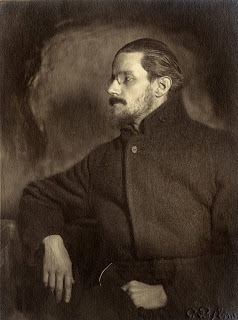 In this short review I present some aspects of Joyce’s work from the perspective of insights on how we think and learn.
My argument is that great literature resonates with our thought processes. In reading Joyce we are provided with a working model of the inner structures and mechanisms through which we experience the world.
I approach this analysis from the perspective of the average reader rather than the rich practice of Joycean scholarship. As such, my remarks are confined to my own, somewhat surface, impressions and interpretations of the literature. Almost at every point in Joyce’s work there are many layers of meaning and great pleasure can be derived from reading and rereading the passages.
My analysis is based around five short lessons:
Lesson One The Inner Narrator
Consider the opening lines from A Portrait of the Artist as a Young Man:
Once upon a time and a very good time it was there was a moocow coming
down along the road and this moocow that was coming down along the road
met a nicens little boy named baby tuckoo…
His father told him that story: his father looked at him through a
glass: he had a hairy face.In this passage we are introduced to Stephen Dedalus as a child. The language is obviously childlike and there is a wonderful lyrical-jaunty quality about it. But who is the narrator? Is it Stephen or someone else? If it is someone else what age is the narrator?
The use of subjective narration and narrative ambiguity is to be found throughout Joyce’s work. Joyce’s storytellers are never neutral they add to the meaning and the memory.
The short story ‘A Painful Case’ from the Dubliners collection provides an apparently more straightforward example of self-narration in a description of the lonely main character of Mr Duffy:
He had an odd autobiographical habit which led him to compose in his mind from time to time a short sentence about himself containing a subject in the third person and a predicate in the past tense. He never gave alms to beggars, and walked firmly, carrying a stout hazel.
What’s interesting here is that this ‘odd autobiographical habit’ seems also to be in evidence in the first quotation above. I suggest that when the narrator says ‘his father told him that story’ it is actually Stephan recalling his childhood. The text reproduces these are memories infused as they are with the sensual realism of childhood experience together with evidence of more complex structures over-layered through adult recall and retelling.
The take-away from this lesson is that ‘we are the stories we tell’ and we construct these stories through our own inner narrative.
Lesson Two Structure and Meaning
There is a wonderful Irish tune called the Mason’s Apron that has about six parts and when its played well it provides a great platform for musicians to show off their skills by varying the style and tempo whilst still finding a way pack to the central theme.
In the same way Joyce’s Ulysses is a structural masterpiece not because it displays one great structural device but because it has so many. One way of appreciating this entire work is to see it as an exhibition of structural virtuosity.
In addition to varieties of inner and outer narration, there is an episode written as a play complete with stage directions, there is also a section using newspaper narrative with headlines and a section (scholars call it the Ithaca episode) written as if it was meant to be learned by rote in the form of question and response. This hilarious situation involves the two characters Leopold Bloom and Stephen Dedalus who are both quite drunk as they arrive at Bloom’s home in Eccles Street:
What action did Bloom make on their arrival at their destination?
At the housesteps of the 4th of the equidifferent uneven numbers, number 7 Eccles street, he inserted his hand mechanically into the back pocket of his trousers to obtain his latchkey.Was it there?
It was in the corresponding pocket of the trousers which he had worn on the day but one preceding.Why was he doubly irritated?
Because he had forgotten and because he remembered that he had reminded himself twice not to forget.What were then the alternatives before the, premeditatedly (respectively) and inadvertently, keyless couple?
To enter or not to enter. To knock or not to knock.Bloom’s decision?
A stratagem. Resting his feet on the dwarf wall, he climbed over the area railings, compressed his hat on his head, grasped two points at the lower union of rails and stiles, lowered his body gradually by its length of five feet nine inches and a half to within two feet ten inches of the area pavement, and allowed his body to move freely in space by separating himself from the railings and crouching in preparation for the impact of the fall.This is great fun to read and the structure is often referred to as the catechism approach. Joyce was perhaps poking fun at the teaching methods he encountered for religion and theology.
The take-away from this lesson is to recognise how we embed meaning in the structures and manner in which we communicate.
Lesson Three HypertextMost people involved in computer science will recognise the term ‘hypertext’ (it is in fact the ‘h’ in the familiar http string that we find in Internet addresses). However, the origins of the term predate the Net. In the 1960’s Theodore H Nelson described the term as electronic text that was characterised as non sequential. By this he was referring to the reader’s ability to trace a series of different paths through the same piece of text. If you want a good example of this then look up ‘hypertext’ on wikipedia and see where your reading takes you.
Reading hypertext is an active process as it involves choice and exploration of layers of meaning. This characteristic is also true of great works of literature (I am not the first to posit this idea and should you so wish you can hypertext off to study Derrida, Foucault and Landow).
Long before the Internet Joyce understood the power of interconnection, inference, hints and echoes in literature. Throughout Ulysses there is an obvious underlying intertextual resonance with Homer’s Odyssey. However, the hyper-textual framework extends throughout the novel and it conveys a much deeper, broader and inter-connected network of meaning. For example, one of the characters Stephen Dedalus was first encountered in an earlier novel by Joyce, while the timeframe as one day (16th of June 1904) starts twice: once with Stephen and once with Leopold.
Each episode has an underlying theme and it’s almost impossible to read the main text without your thoughts spinning off in many different directions. In the extract below from Sirens we encounter a form of musical overture to Bloom’s later erotic observations of waitresses in the Ormond Hotel:
BRONZE BY GOLD HEARD THE HOOFIRONS, STEELYRINING IMPERthnthn thnthnthn.
Chips, picking chips off rocky thumbnail, chips. Horrid! And gold flushed more.
A husky fifenote blew.
Blew. Blue bloom is on the
Gold pinnacled hair.
A jumping rose on satiny breasts of satin, rose of Castille.
Trilling, trilling: I dolores.
Peep! Who’s in the… peepofgold?
Tink cried to bronze in pity.
And a call, pure, long and throbbing. Longindying call.
Decoy. Soft word. But look! The bright stars fade. O rose! Notes chirruping answer. Castille. The morn is breaking.
Jingle jingle jaunted jingling.The take-away from this lesson is that much of our thinking is characterised as more like a hyper-textual network of associations rather than any logical, hierarchical or similarly organised system.
Lesson Four A Theory of Aesthetics
In the Portrait there are a series of episodes involving Stephen working through some theological and philosophical arguments. The following extracts are spoken by Stephen as a college student to a fellow student called Lynch and concern the essence of beauty – I suggest that Joyce’s own views that are in evidence here:… Plato, I believe, said that beauty is the splendour of truth. I don’t think that it has a meaning, but the true and the beautiful are akin. Truth is beheld by the intellect which is appeased by the most satisfying relations of the intelligible; beauty is beheld by the imagination which is appeased by the most satisfying relations of the sensible. The first step in the direction of truth is to understand the frame and scope of the intellect itself, to comprehend the act itself of intellection.
and later when they argue on the subjectivity of beauty
This hypothesis, Stephen repeated, is the other way out: that, though the same object may not seem beautiful to all people, all people who admire a beautiful object find in it certain relations which satisfy and coincide with the stages themselves of all esthetic apprehension. These relations of the sensible, visible to you through one form and to me through another, must be therefore the necessary qualities of beauty. Now, we can return to our old friend saint Thomas for another pennyworth of wisdom.
Even though these arguments are provided as the student Stephen working through his own approach to philosophy (and there is much evidence in the text of a kind of an innocent, tentative naivety in this) we are presented, as in the case of the examples above, with some very useful insights.
The take-away from this lesson is Joyce’s affirmation of what Jurgan Habermas later refers to as communicative rationality – process by which societal constructs such as beauty, truth and justice are formed.
Lesson Five Stream of Consciousness
Finally, Joyce is well known for his use of a stream-of-consciousness technique to convey an impression of how people think.The frequently cited example is perhaps the Molly Bloom soliloquy which comes at the end of Ulysses. The extract I present here is from an earlier part of the book where Stephen is walking on the beach. I have inserted a dash / to indicate the transition from narrator to stream-of-consciousness and back.
His gaze brooded on his broadtoed boots, a buck’s castoffs, /nebeneinander/. He counted the creases of rucked leather wherein another’s foot had nested warm. /The foot that beat the ground in tripudium, foot I dislove. But you were delighted when Esther Osvalt’s shoe went on you: girl I knew in Paris. Tiens, quel petit pied! Staunch friend, a brother soul:
Wilde’s love that dare not speak its name. His arm: Cranly’s arm. He now will leave me. And the blame? As I am. As I am. All or not at all.
nebeneinander. He counted the creases of rucked leather wherein another’s foot had nested warm. The foot that beat the ground in tripudium, foot I dislove. But you were delighted when Esther Osvalt’s shoe went on you: girl I knew in Paris. Tiens, quel petit pied! Staunch friend, a brother soul: Wilde’s love that dare not speak its name. His arm: Cranly’s arm. He now will leave me. And the blame? As I am. As I am. All or not at all.The take-away from this lesson is in the form of ‘exhibit a’ – this is what we are taking about when we think of ‘thinking’. Surprisingly, we don’t get grammar as we know it, there seems to be little by way of logical progression or obvious structure and yet we have to agree (I certainly do) that this exhibit rings very true. I have often argued that writing is a form of thinking and that a consequence of the writing process is the manner in which it forces us to impose progressive arguments and logical structure on our thoughts. Thankfully, stream-of-consciousness as above would seem to be the norm though.
In the preceding discussion I have presented, what I choose to call, five lessons from Joyce that provide insights on how we think and how we experience the world. These are just the tip of the iceberg and further reading of Joyce will continue to provide a powerful lens through which we can view our own minds and those of others.
-
The Wisdom of the Fox and the Hedgehog
There is much debate about the kind skills we require for success in the 21st Century. It can be argued that what we learn in school and college often falls short of what we need in everyday life.
Employers look for more than academic achievement when considering who to take on – in many cases they seek evidence of a broader set of skills encompassing problem solving, creative thinking, social skills and ethical appreciation.

Consider the ancient Greek parable by Archilochus that contrasts the skills of two familiar animals:

“The fox knows many things; the hedgehog one big thing.”
I think this is a useful metaphor to help us appreciate the complexity of the mix of skills required for life in the 21st Century. A fox ranges over quite a wide territory and is regarded as generally clever because of its adaptability and capacity to get the most out of opportunities. The skills of the fox are driven by curiosity and a need to survive on meagre and unpredictable sources of food. The fox is a great generalist.
The hedgehog has a great strategy for dealing with predators – it rolls itself in a ball and presents its large array of spines as a defence. Any animal, a fox for example, confronting a hedgehog is likely to be repelled by the prospect of a prickly experience. The hedgehog can dig deep and survives on the insects and snails in a small area. The hedgehog is a specialist.
When you go to college you select ‘one big thing’ that you intend to be good at; be it Business, Computers, Law and so on. Similarly, some people focus on a trade or music or sport and invest a lot of time and energy to develop the specialist skills involved. We use the term ‘domain specific skills’ when we refer to competence associated with such disciplines or contexts.
Clearly we expect graduate accountants to be able to generate and interpret financial reports and we require technical skills from engineering and computer students and so on. But we also expect much more. There are few professions that do not require problem solving skills and there are few career paths where success can be achieved by working alone without collaboration with others.
Also, there is little merit in being “a jack of all trades and a master of none”. Only by focusing on the development of a specialism or expertise can you develop certain kinds of insights. You need to experience how to set goals and achieve them. Only through specialisms will you genuinely appreciate the nature of practice and persistence. There are ways of knowing the world that require prerequisite skills, for example mathematical competence for Physics, and therefore specialist skills will always be in demand. In fact, many argue that there is a premium on specialist skills and an over supply of generalists. Too many foxes and not enough hedgehogs!
However, in the complex world of the 21st Century, more and more we need people who are both specialist and generalist combined. This is often called a “T” profile of skills – deep knowledge in one area and broad knowledge across a wider range of contexts. This is what we look for in our graduates. A specialist who is worldly wise, one who can think creatively, work with others, cope with uncertainty and manage unpredictable events.
In short it is not enough to be like a hedgehog and have one big skill and it is not enough to be a generalist like to fox. You need to have the characteristics of both.
-
Ed Tech 2008
Attended EdTech 2008 held in Dundalk IT (DKIT) and presented my own paper on Conceptions of Digital Literacy posted on slideshare. Quite an excellent conference and a good blend of practical and research content. Of note the GOAL project on adult learning http://www.belfastmet.ac.uk/goal/index.asp
and the extensive use of www.screencast.com in other institutions.


