For Students
How to be successful as a college student
-
Questions and Inquiry
I have a recent publication in E-Learning and Digital Media and the following post is a shorter version of some of the ideas I discuss in this paper on Questions, Curiosity and Inquiry.
Questions are the root of inquiry; they initiate, sustain and invigorate all aspects of deep learning. Questions direct investigation, drive creativity, stimulate discussion and are the bedrock of reflection. In order to understand inquiry we need to deal with questions. I begin by attempting to clarify potential misconceptions of what exactly questions are. I argue for precision in language and I encourage a fuller conception of questions as situations and processes rather than simple sentences. I also discuss curiosity and elaborate on Dewey’s conception of curiosity as a natural resource for use in the training of thought. These ideas on the nature of questions and curiosity help to frame our understanding of the Inquiry Cycle as a model of learning. They can also act as a bridge, closing the gap between theory and practice, contributing insights on the integration of technology in teaching and learning and suggesting new areas of application and research on learning and inquiry.
Questions as Situations
Questions and questioning are familiar processes ubiquitous to human communication––they are what we do. It is perhaps because they are so essentially embedded in the way we think that we find it difficult to step back and contemplate what it means to question. When we describe learning in terms of inquiry we are clearly affirming that learning and questioning processes are somehow intertwined. From an educator’s perspective, it is therefore important to establish a conceptual framework to deal with questions and questioning.
 In attempting to provide such a framework one has to begin with a clarification on the use of language. There is a source of potential confusion that arises when we discuss the nature of questions in everyday life. This occurs when we regard questions merely in terms of sentences rather than situations. If I were to ask you now to provide me with a sample set of questions, say for the purposes of illustrating the points I wish to make, you may be tempted to write a list of sentences beginning with words such as ‘who’, ‘what’ or ‘where’ and ending in question marks. Does this list constitute a list of questions? In an everyday sense it may be acceptable to argue that it does; however, for the purposes of any meaningful analysis, standalone sentences like these are insufficient to be considered as examples of questions.
Consider for instance the sentence “What was the result of the match? “ This can indicate a great variety of queries: it may arise as a text message from me to my son and he will take it that I am asking about a football result; in another context, it is plausible that the same sentence would be included in the text of a scientific paper. The meanings in each case are entirely different. When sentences are presented without a situation of context, even when they adhere to the appropriate grammatical conventions to indicate a question format, they are insufficient to warrant consideration as examples of questions. Such sentences indicate only a class of question or question types. A sentence only becomes a question when it is spoken or read and interpreted within a context. Furthermore, we need to consider what responses or feelings arise in the individual as a result of experiencing the sentence-question.
Put together the experience, the response, the consequent feelings and the manner in which each of these in turn transacts with the other and we have a broader, more useful concept, that of the ‘question situation’. Question situations comprise the full extent of a query and context. In education, this distinction between question types and question situations is important. All too often the question type is considered in lieu of the situation. When we talk about textbook and exam questions we often fail to appreciate the full context in which the student encounters the question.
Goal-oriented Questions versus Intrinsic Curiosity
This conceptual shift, to regard questions as embedded in situations rather than standalone entities, gives rise to further linguistic challenges. We often talk about a person ‘having’ a question and our immediate tendency is to fix and locate questions in the mind of individuals. This is understandable as we regularly seek information by means of a question and expect matters to be resolved by means of an answer. However, this information seeking is always undertaken within a wider context or purpose. We wish to know the time so as not to miss the train and so on. We require constant feedback as we go about the accomplishment of the goals we set in daily life.
 In instances when we ask questions such as to seek directions or test the temperature to see if we need a coat or search the Internet, we are seeking information to help us progress or decide upon a course of action. These questions are functional in that they are directed at the achievement of a goal. However, this is precisely the reason why we should regard questions within their wider context. When we seek information in this way there is always pretext and subtext, an underlying purpose and setting.
However, what of question situations that appear unrelated to an external goal or purposeful activity? What happens when a strange object catches our attention or we investigate a novel experience as when a child plays with sand and so on? Clearly such a posture arises directly from an intrinsic interest in a situation or opportunity. In the absence of external goals these impulses are usually described as curiosity. From an educational perspective, this distinction between goal-oriented questioning and questions that arise from intrinsic curiosity is significant. The notion of harnessing natural curiosity as an enabler for learning is evident in many writings on education from Plato and Confucius to Montessori, Brunner and of course Dewey. In school contexts, much pedagogic design and classroom practice is directed at stimulating curiosity.
Helpfully, in the English language we usually say that we ‘find’ a situation or object curious. This recognises the transactional nature of curiosity and that it is a characteristic of the interplay between individual and environment. Once again the notion of question situations is reinforced especially so with intrinsically oriented questions. From an instructional perspective, we need to be mindful that we are trying to bring about situations with certain qualities. We cannot manufacture curiosity the best we can do is create the conditions that will facilitate it.
Questions and Decisions
Often our inclination is to regard questions as static or fixed. We often regard decisions we make about a future course of action in terms of a single point or question. Even when we take context into account we tend to reduce the situation to a single point rather than a continuous dynamic. Consider the following story:
Three hikers were traversing the mountain range when a dense fog enveloped them. They needed to decide whether to progress further to the next town or to turn back. Going forward was a shorter journey but involved a greater risk, as there were dangerous cliffs ahead. Going back was longer and would mean loss-of-face, as they would not achieve their stated goal. They argued for some time and eventually they split up; two went forward and one back to base.
Suppose I were to stumble upon this group as they were arguing on the mountain. I, or even they, might say they were considering the question of whether to go forward or back. However, it is easy to see that that was not the real issue at hand. They were weighing up the balance of increased personal risk in going forward against the shame and disappointment or going back. Perhaps, they were also considering future consequences such as the camaraderie of the group–whether to stick together or each to act as an individual. These were underpinning questions and the outcome for each individual was the selection of a future direction. So rather than single points we have a complex interaction: questions arise, questions are considered, some lead to other questions, some grow while others get resolved.
Locating questions in terms of a single point in time, place or person seems unsatisfactory. Questions are nebulous and difficult to pin down. It is more useful to consider questions in terms of dilemmas of disturbances that propagate outward. In the story above the fog precipitated the argument and so on. The question may be regarded as a state of affairs. Questions have trajectories.
Open and Closed Questions
We often refer to open and closed questions and intuitively we recognise that some questions may be quickly resolved while others seem to propagate outwards leading to an endless sequence of possibilities. Consider for example, the question one might ask while scanning for a particular author in a bookshop: “Does the letter P come before S on the shelf?” (q1). For most people this is easily and quickly resolved; a rapid internal recitation of the alphabet and the matter is settled.
In contrast, recently a teacher’s ICT discussion group reported the following question, as asked by a child: “Why is the alphabet always in the same order?” (q2). This question perplexed many adults and through subsequent discussions I came to hear about it. It is as if the question caused a ripple of curiosity not just on the nature of the alphabet but also as to why children frequently ask such profound and apparently obvious questions.
What’s interesting is perhaps, and I can only speculate on this, the child who asked the q2 question expected a straightforward answer. From a child’s perspective, q1 and q2 are closed questions not too far apart in their nature––matters easily resolved by means of new information. However, for others, including myself, q2 is qualitatively different in nature to q1. For q1 (the order of letters) one knows there is an answer to the question, one has a strategy to arrive at the answer and importantly, with the answer comes a form of closure to the situation. On the other hand, for q2 (why the order of letters) one can only speculate if there is an answer, there is no obvious strategy available to arrive at an answer (as many possibilities would need to be considered and investigated), and finally, one can sense that in attempting to resolve the question––far from closing off a situation––new areas of inquiry will be opened up.
Questions and Critical Thinking
Consider again the child’s question (q2) on the order of the letters of the alphabet. To this kind of question many adults might say “Oh! I never thought about that”, what they mean is that their attention has never been drawn to it. As adults we cannot possibly attend to all of the stimuli that we encounter and, as a means of dealing with such complexity, we have developed schemes to manage how, when and what we will pay attention to. In education, critical theorists promote a model of adult learning centred on awareness and transformation of previously taken-for-granted assumptions. The challenge for many adults is awareness of what would otherwise be taken for granted and this begins with attending to these assumptions.

Children often ask questions that initiate critical thinking in adults. For example, I remember the following conversation with my father from when I was about five or six years old:
Me “What’s that tall thing sticking up from the building?”
Father “That’s called a crane it’s used to lift things”
Me “A crane! I see! Yes but who decided to call it a crane?”
Father “I don’t know it’s just called that I suppose”
I suggest that from the perspective of a five year old, the question may be regarded as nothing more significant than a request for more information on the situation. If my father had answered: “the government get to name things” I may well have been content with that and closed my line of questioning. Thankfully, he answered honestly by saying he didn’t know and implicit in his response “I never thought about that”. As adults we may be impressed when we hear children ask potentially critical questions but what is really occurring is that our attention is drawn to previously uncontested assumptions.
Curiosity
Thus far I have argued that we consider questions as situations characterised as disturbance, disequilibrium or matters that must be attended to. In many instances such matters can be quickly closed off and resolved; however, there are also questions that open up new concerns, they develop outwards as ripples or as trajectories of inquiry. As educators we should have a special interest in these open questions as they have self-sustaining qualities and are processes that can lead to new insight and understanding–in other words they are learning processes. Consider again the question of why the letters of the alphabet are always in the same order (q2 above). When I first heard this I thought, “that’s interesting I never considered that before”. New possibilities came to mind–why don’t we order the alphabet putting the most frequently used letters first or why not organise to separate the vowels and consonants and so on. My curiosity was aroused. It is this curiosity intrinsic to the situation, which drives the subsequent questions. Curiosity may therefore be regarded as the capacity for one question to stimulate another by means of the level of intrinsic interest that arises.
This characteristic of curiosity, involving as it does a causal connection between attention and interest, is implicitly understood by many teachers. When we talk of arousing curiosity in others perhaps this process of drawing attention and thence desire is really what is involved. Note that the causal relationship is mutual: once attracted, interest arises, interest in turn sustains and enhances attraction.

In many circumstances educators take questioning and the nature of questions for granted; ‘I know a good question when I hear one’ is a common approach. The implication is that you wait for good question situations to arise rather than actively seeking to bring them about. Part of the challenge for teachers is the gap between theory and practice. Insights on the nature of questions and curiosity as discussed above are often difficult to connect with practice and translate to useful strategies for the classroom.
Note: all the pictures are mine and I’ll leave it up to you to work out the connections. Curiosity and all that!
You May Also Like

Getting to Grips with Academic Writing
-
Why We Learn
Sometimes big questions just sit under our noses and are too close and obvious to warrant attention. The matter of why we learn falls into this category. It seems obvious that we learn every day of our lives and that learning is important but why is it so?
Part of the answer lies in our evolutionary past. To understand why we learn we need to appreciate the benefits of learning in terms of survival and growth of human beings. Learning is a special way in which we can gain advantage in our quest for success.
Every person and indeed all animals have innate abilities developed through natural selection. Over many generations animals adapt to their environment and acquire specialist abilities for hunting, defence, reproduction and so on. When we observe animals in their environment we appreciate the usefulness of these assets. Mink have fur coats to survive the cold winter, cheetahs run very fast and hedgehogs have spines and roll in a ball when under threat.
Notice it is not easy to distinguish a behavioural ability such as knowing when to run and a physical ability such as well-developed muscle and skeleton for running. If you look at anatomy and physiology it only makes sense in terms of the behaviour it supports. Behaviour in turn, can be best understood when we look at context and environment.
Notice also that it is not always easy to see what is acquired through natural selection and what may be learned during the lifetime of an organism. Many animals display innate tendencies to behave in a certain way – dogs are curious because that’s the way they are. Other behaviours are learned through experiencing the world. Abilities such as knowing where to find food or how to avoid danger are developed through experience in the world. Even physical abilities such as speed, although primarily acquired through evolution, may be further enhanced during life. We can learn to run fast or stand on our heads – nature gives us the raw materials but we use learning to make the most of them.
We are better learners than all other animals. It is our ability to learn that has given human beings the competitive edge in terms of dominating the environment. Many animals do learn but very few can even approach the levels of sophistication in learning that we achieve. Learning is our ‘super ability’ and through our superior learning we achieve all that we are.
When viewed through the lens of evolution and survival, it is easy to appreciate why we need to learn. Here are some types of learning and why they are important to us:
- We learn to REMEMBER – in this way we associate places, events and situations with what has gone before.
- We learn to THINK – in this way we can imagine new situations, avoid dangers and harness our efforts toward desirable goals.
- We learn skills in order to ACT – in this way we nurture specialist abilities to gain further advantage in anticipated situations – skills are not just physical,cognitive skills are also developed, of these language and literacies are perhaps the most important skills for humans.
- We learn to PARTICIPATE – in this way we work together by contributing to and relying on others to achieve our social, economic and spiritual well being.
These four forms of learning are closely interlinked and Learning to Participate can be said to encapsulate the others.
So to answer the question of ‘why we learn’ we learn to participate as people in the world in order to make all our lives better.

You May Also Like
Getting to Grips with Academic Writing
-
Ten Tips for Writing Academic Papers
Completing academic writing assignments is one of the most important skills you will need to develop as a student. This is true regardless of your subject or discipline.
Based on my own experience writing and correcting papers and discussions with students I have compiled these ten tips to help you get going. I have used these at the Academic Writing Club we set up in National College of Ireland to support students through the challenges of this process.1 Read the task
Spend time reading and analysing the task you have been assigned. Look for action words such as ‘discuss’, ‘compare’, ‘critique’ and so on. Check if you need to provide examples or to analyse or deal with a particular context. Write the task at the head of your essay and make sure you address every component of the assignment.
2 Get on with it!
Start writing straight away – don’t keep putting it off. Many students say they need to read first and write later. It is better to read and write at the same time (see tip 4 below).
3 Use the opening paragraph as your plan
Start with something like “In this assignment I will….” and then go on to describe what the reader can expect. Write this paragraph first. Then leave it alone – don’t keep reworking it during the writing process – wait until your assignment is near to completion and then (and only then) rewrite the opening.
4 Read and research with purpose
Once you have a plan (based on your opening paragraph) you can then attack the required background reading. The secret is to be ‘purposeful’ in your approach. Continuously ask yourself why you are reading the specific text before you and what it will contribute. Write snippets as you go. Don’t get taken in by mindless reading and avoid ‘nice to know’ sidetracks – if you come across something interesting but not directly helpful to your assignment put it in a folder for future reading.
5 Make three points
I want to make three points about this tip. First it’s a useful starting point for a new topic – it gives a simple structure and the reader knows what to expect. Second it stretches your thinking so you can easily compare and contrast the ideas you wish to discuss. Finally, you can always keep going to add more and more points later.
6 Use paragraphs to provide structure
One of the most useful and often neglected devices for both writer and reader is the paragraph. It is often possible to write separate paragraphs from different parts of your assignment and to connect these in later drafts. An advantage of this approach is that your notes and memos will gradually build to become paragraphs. Each paragraph should have it’s own structure – pay attention to the key sentence that usually carries the main message of the paragraph. Make backward and forward connections with linking sentences throughout your paper.
7 Remember you are the writer
Many students fail to grasp that a term paper assignment is essentially a learning task that requires their engagement in the process of writing. It is more important to provide your own thoughts (even if you feel they are inadequate) rather than reproducing the work of others. Keep quotations to a minimum and cite all your sources using one system of referencing such as APA, MLA of Harvard.
8 Keep it clear
Write in a clear straightforward style. Avoid complex sentences. Make your argument with precision and elegance and use no more words than necessary.
9 Write a little every day
Writing can be tiring especially if you are not used to it. It’s a good idea to break the task down and write something each day until the assignment is due. Even if you are busy with other things or feeling tired try to accomplish some part of the work – such as proof reading or formatting – in every session.
10 Write a summary and conclusion
A summary captures the main points that you have made such as “here I have provided ten tips on academic writing for students” while a conclusion provides a key message that can be inferred from your paper such as “it’s over to you now good luck with your academic writing“.
You May Also Like
Getting to Grips with Academic Writing
-
From marks to Marx: Shifting your mindset for learning
We all like to achieve and when it comes to doing a course or gaining a qualification we want to achieve the best result possible.
Naturally we want to get an A+ or a First Class Honour in whatever subject we study. Striving to get a good mark – a Distinction, Merit or Commendation – is a useful approach to learning and for many people it is the driving force guiding their learning effort.

We all like to achieve in learning but what should we really aim for? (My picture of Doo Lough, County Mayo) However, it is worthwhile to ask if it the ‘best’ approach? Is there a better, more fruitful and, in the long-term more rewarding target to aim for?
I argue that there is and want to make a case for moving beyond a simple focus on marks and assessment to the more expansive idea of growing your mind through ideological critique and praxis.
If you are an active participant on a course you will likely have learning goals. These are implicit and explicit statements of what you wish to achieve. How you approach different topics and learning challenges, where you apply effort and how you measure progress are all parts of your learning strategy which in turn is guided by your goals.
It is useful to be aware of your learning goals and to be prepared to question and review them regularly.
What do I want to achieve?
This is the most important decision you can make about your own learning. You could decide “I want to pass the exam” or even go further “I want to get an honours grade” or further again “I want first class honours”
or
you could go beyond grades and shift your goals toward an intrinsic interest in the subject and strive to master the topic in itself.
You could also consider goals that relate to your own competence such as “I want to develop a new design for….” or “I want to investigate why…..” or “I wish to become very knowledgeable on…..”. These goals are stated without reference to the formal assessment process.
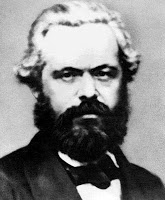
Karl Marx in 1861 As an adult, you can go further again. Here I quote from Karl Marx, the last line from Thesis on Feuerbach
The philosophers have only interpreted the world, in various ways; the point is to change it.
The term ‘praxis’ is used to denote a process whereby theory, skills or knowledge are used to realise and enact the potential therein. Through the writings of Paulo Friere we see how literacy education results in emancipation. Lives can be transformed and the prevailing order challenged. Imagine that as a learning goal “I want to change the world”.
This is not some vague, idealistic notion that can be countered by the shallow challenge of “that’s all very well but I need to pass my exams”. The most important goals in adult learning should be ideological critique and praxis. Everyone who learns has a responsibility to contribute and improve our world.
Students in our schools, colleges and universities are often well placed to use praxis as a purpose and means of learning. For example, in National College of Ireland we have an elective module on Service Learning available to our business undergraduates. However, many students fail to grasp the opportunity. They see the purpose of college in narrow terms and focus on their next assessment and look for formulae to get good marks without much effort.
As educators we need to take responsibility for providing a limited view of learning. Much of the assessment infrastructure is built around pre-defined learning outcomes and an instrumental view of what it means to achieve. We need to question the system and challenge the underlying assumptions. It’s time to critique the ideology of our education system – in short, to shift mindsets from marks to Marx.
Strangely enough, at a personal level if you move your learning mindset beyond the next assessment and adopt critique and praxis as your ultimate learning goals you will likely achieve high marks in all that you do.
You May Also Like
Getting to Grips with Academic Writing
-
How to Write a Literature Review for a Dissertation
Writing a Literature ReviewWriting a dissertation is one of the great learning tasks of college education. However, many students find it a daunting process. One of the first challenges you face is writing a literature review and the purpose of this post is to help you get started with the process, to keep you on track as you proceed and to provide a means of self-reviewing your outputs when you (think you) have completed.Let’s start with a simple set of questions: What constitutes a literature review? What is it used for? and What distinguishes a good literature review from a poor one?As the name implies, a literature review is a review of other people’s work in a particular field of scholarship. Such a review is always directed and informed by the research question to be addressed. For example, if your research question is related to adult literacy then you will need to provide a review of other works, be they theoretical models, research reports or practice studies, that relate to adult literacy. Most importantly, a literature review cannot be of any value unless it is referenced to some form of research question or problem.It is a common mistake for students to misunderstand the purpose of a literature review – it is not a means for the student to demonstrate wide ranging knowledge or to reproduce theory or to provide a history of developments in a particular field (although it can involve each of these). It is simply a matter of ‘re’viewing the literature from the perspective of the research question or topic. In other words, asking and addressing questions of the form ‘if such and such says or has found this then what are the implications for my research?’
The purpose of a literature review is to guide and support you and your reader in furthering the investigation or inquiry at hand. In academic scholarship you can and should build on the works of others – provided they are properly cited.Here is an analogy that might be useful: If you were planning to visit Rome then you would likely consult a guidebook and some web sites for information. You would be very interested in the section dealing with the specific area were you intend to stay, and you would also focus on the sites you plan to visit. To a certain extent, you don’t need to read everything in the guidebook. However, you might need to bring the guidebook with you and consult it during your visit. Imagine if each visitor had to explore the entire city for the first time – we would have very poor experiences in Rome. It is wise therefore to find out from other sources all that you need to know to make your particular journey as successful as possible. So (please forgive me if this sounds patronising!) consider the following – the value of a guide book is always considered with respect to the place and time of your visit and similarly, literature reviews are intended to support the research inquiry at hand.In academic scholarship you can use a literature review to address the following issues:
- To outline a conceptual framework for your research question
- To develop an argument as to the importance of your research question and to discuss the wider implications amd context
- To discuss the theoretical and philosophical (epistemological) underpinnings of the problem
- To refine, focus and improve the research question
- To discuss relevant and related theory, models or frameworks
- To discuss other relevant research
- To discuss research approaches and methods (although a fuller treatment of this is normally part of a later section on methodology)
A good literature review is never passive – the writer is constantly making connections between the work of others and the current research or inquiry. Indicators of a good review:- It is constructed from and connected to the research question
- It is comprehensive in relation to the research question
- It is connected and well structured
- It provides a sound foundation for the other components of the dissertation
- The writer adopts a critical stance
The most straightforward way to organise a literature review is to structure it around the central themes that arise from the research question.Here are 10 questions you can use to self-assess your literature review:- Have I clearly stated my research question or problem at the onset?
- Have I provided an introduction that indicates the structure of my review and a rationale for that structure?
- Have I discussed each of the concepts/terms as used in my research question and provided a rationale for their inclusion?
- Have I conducted a comprehensive search for, and included the key relevant theoretical and research works related to my topic?
- Have I connected all parts of the review to my research question?
- Have I adopted a critical stance in my writing?
- Have I included discussion on other similar research?
- Have I argued for the importance of my research question and framed it in terms of wider issues and philosophies?
- Have I correctly used the Harvard Referencing System or similar?
- Have I proof read the review such that it is free from typos and errors?
You May Also Like
Getting to Grips with Academic Writing
-
RoboBraille An Interesting Pedagogical Tool

Some of my colleagues and I are participating in a European project as part of a transnational consortium looking at the uses of RoboBraille -an interesting tool/service that has emerged as an assistive technology for the blind.
As the name suggests RoboBraille began as a Braille conversion tool to enable simple text to be rendered in various forms of Braille.
The technology has now been developed to provides conversion and translation between a wide range of formats:
From .doc, .docx .htm, .html .xml .txt. .asc .rtf .pdf (all types) .epub, .mobi .tif, gif, .bmp .jpg, .j2k, .jp2, .jpx .pcx, .dcx .djv
To: Braille, MP3, ebook (epub or mobi), Daisy, Accessible Formats
Put simply, if you have a text file (say from a word processor like MS word) and you want to be able to listen to a very good synthesised voice reading this document then you simply submit your file on the web site above or by e-mail. You get back an MP3 or a Daisy (a format that allows text and speech to be played together). This is very useful for people who find reading difficult – the partially sighted, people with literacy difficulties and people with dyslexia.
Go ahead and try the service it’s free to non-commercial users.
If you don’t mind please let me know how you get on as we are making a catalogue of good practice as part of the project outputs.
You May Also Like
Getting to Grips with Academic Writing
-
The Disengaged Student
In the further and higher education sectors we often come across the phenomenon of the disengaged student.
Typically a small number of students who register for a course seem to drift away – they are characterised by poor levels of engagement in class, infrequent attendance and lack of compliance with assignment deadlines. This is very frustrating for all concerned and inevitably it leads to trouble – failed assessments, repeats, appeals, reviews, etc..
All this seems to happen like a car crash in slow motion; we can see the inevitable outcome from a long way out and there seems nothing we can do about it.
By treating students are adults we recognise that they need to take responsibility for their own learning. Higher education is not compulsory and parental influence on learning should be much less than in school. This presents a dilemma educators and parents; on the one hand we want students to succeed but we also need them to succeed ‘on their own’. Too much interference and students never learn to take control; on the other hand, too little support and they drift into dissengagement.
I think part of solution could involve a new component called ‘Learning to Learn’ that would be regarded as essential for all incoming students. The intended outcome is quite straight forward – the student will become self-directed in their approach to learning.
How can this be taught? It is surely not easy! Well it may be more straightforward than we expect. I suspect that the strategies would involve some combination of the following:
- Start from where student’s are at now. If they have just left school then they are used to being told what to do and what is expected of them. They will not find it easy to suddenly be told that ‘everything is left up to you’ in college. Yes self-derecteness is the desirable attribute for the college graduate but we have to recognise that incoming students have not had an opportunity to learn this skill.
- Assess early, assess frequently and make it count. From the onset every student needs to be able to receive valuable feedback on how they are doing and most importantly, feedback needs to be accompanied by clear advice on how to improve.
- Encourage active discussion on ‘engagement’ – don’t develop or convey a sense of ‘it’s none of my business if you don’t show up’. When a student misses a class ask where they have been and is everything ok.
- Get students to do peer assessment. Yes get student’s to correct each others work. This may need to be formative only (i.e. not counting for grades) but it provides an opportunity for student’s to understand assessment criteria and structures.
- Get student’s to teach each other and to study together. This will not happen spontaneously so groups may need to be formed and guidelines proposed.
- Give student’s goal-oriented targets stating explicitly what they need to achieve rather than time-oriented targets such as how many hours they need to study.
- Get student’s to contribute to the design of assessments.
We will always have some percentage of students who become disengaged but using the strategies outlined above we may be able to keep that number to a minimum.You May Also Like
Getting to Grips with Academic Writing
-
The Wisdom of the Fox and the Hedgehog
There is much debate about the kind skills we require for success in the 21st Century. It can be argued that what we learn in school and college often falls short of what we need in everyday life.
Employers look for more than academic achievement when considering who to take on – in many cases they seek evidence of a broader set of skills encompassing problem solving, creative thinking, social skills and ethical appreciation.

Consider the ancient Greek parable by Archilochus that contrasts the skills of two familiar animals:

“The fox knows many things; the hedgehog one big thing.”
I think this is a useful metaphor to help us appreciate the complexity of the mix of skills required for life in the 21st Century. A fox ranges over quite a wide territory and is regarded as generally clever because of its adaptability and capacity to get the most out of opportunities. The skills of the fox are driven by curiosity and a need to survive on meagre and unpredictable sources of food. The fox is a great generalist.
The hedgehog has a great strategy for dealing with predators – it rolls itself in a ball and presents its large array of spines as a defence. Any animal, a fox for example, confronting a hedgehog is likely to be repelled by the prospect of a prickly experience. The hedgehog can dig deep and survives on the insects and snails in a small area. The hedgehog is a specialist.
When you go to college you select ‘one big thing’ that you intend to be good at; be it Business, Computers, Law and so on. Similarly, some people focus on a trade or music or sport and invest a lot of time and energy to develop the specialist skills involved. We use the term ‘domain specific skills’ when we refer to competence associated with such disciplines or contexts.
Clearly we expect graduate accountants to be able to generate and interpret financial reports and we require technical skills from engineering and computer students and so on. But we also expect much more. There are few professions that do not require problem solving skills and there are few career paths where success can be achieved by working alone without collaboration with others.
Also, there is little merit in being “a jack of all trades and a master of none”. Only by focusing on the development of a specialism or expertise can you develop certain kinds of insights. You need to experience how to set goals and achieve them. Only through specialisms will you genuinely appreciate the nature of practice and persistence. There are ways of knowing the world that require prerequisite skills, for example mathematical competence for Physics, and therefore specialist skills will always be in demand. In fact, many argue that there is a premium on specialist skills and an over supply of generalists. Too many foxes and not enough hedgehogs!
However, in the complex world of the 21st Century, more and more we need people who are both specialist and generalist combined. This is often called a “T” profile of skills – deep knowledge in one area and broad knowledge across a wider range of contexts. This is what we look for in our graduates. A specialist who is worldly wise, one who can think creatively, work with others, cope with uncertainty and manage unpredictable events.
In short it is not enough to be like a hedgehog and have one big skill and it is not enough to be a generalist like to fox. You need to have the characteristics of both.
-
Dissertation Writing
 This is a busy time for many students who are working to complete their dissertations.Having supervised and examined submissions over the years I appreciate the investment of effort that students make when completing their research dissertation.For many Master’s degree students this is their first truly self-directed learning project and the experience of carrying out primary research transforms their outlook on knowledge of the world.I would like to offer my top tips for Master’s dissertation writers, here they are:
- When you write a dissertation, even a scientific work you are telling a story – it’s important to unfold the plot in manner that will engage the reader.
- The research question is the crux of the narrative – you need to articulate this question clearly, concisely and frequently throughout the thesis and use it to connect all the parts together.
- A good research question has three characteristics (i) it arouses curiosity in both writer and reader (ii) it contributes significant and useful insights and (iii) it is suitable for investigation by means of an established research method.
- The purpose of a literature review is to establish a conceptual framework for the research question and to discuss other relevant or similar research. Therefore the quality of a literature review is by means of its connection with the research question. A review without reference to a question has little merit.
- Be careful with claims! Statements containing terms such as proved, verified, experiment, significant and so on have certain precise meanings in research contexts.
- Like all good stories, there needs to be a conclusion – a resolution or summing up of the events and some take-away points for the reader.
- Storytellers are never neutral they recreate the story with each telling and through the process they add to it by contributing part of their own experience.
You May Also Like
Getting to Grips with Academic Writing


